On October 28, the full text of the "Recommendations of the Central Committee of the Communist Party of China on Formulating the Fifteenth Five-Year Plan for National Economic and Social Development" was released, drawing widespread attention from all sectors of society.
In this episode of "Dialogue," two authoritative experts are invited—Huang Hanquan, Party Secretary and President of the Chinese Academy of Macroeconomic Research, and Tian Xuan, Dean of the National Institute of Financial Research at Tsinghua University and Associate Dean of the PBC School of Finance—to provide authoritative interpretations of the "15th Five-Year Plan" recommendations and help us understand the next five years.
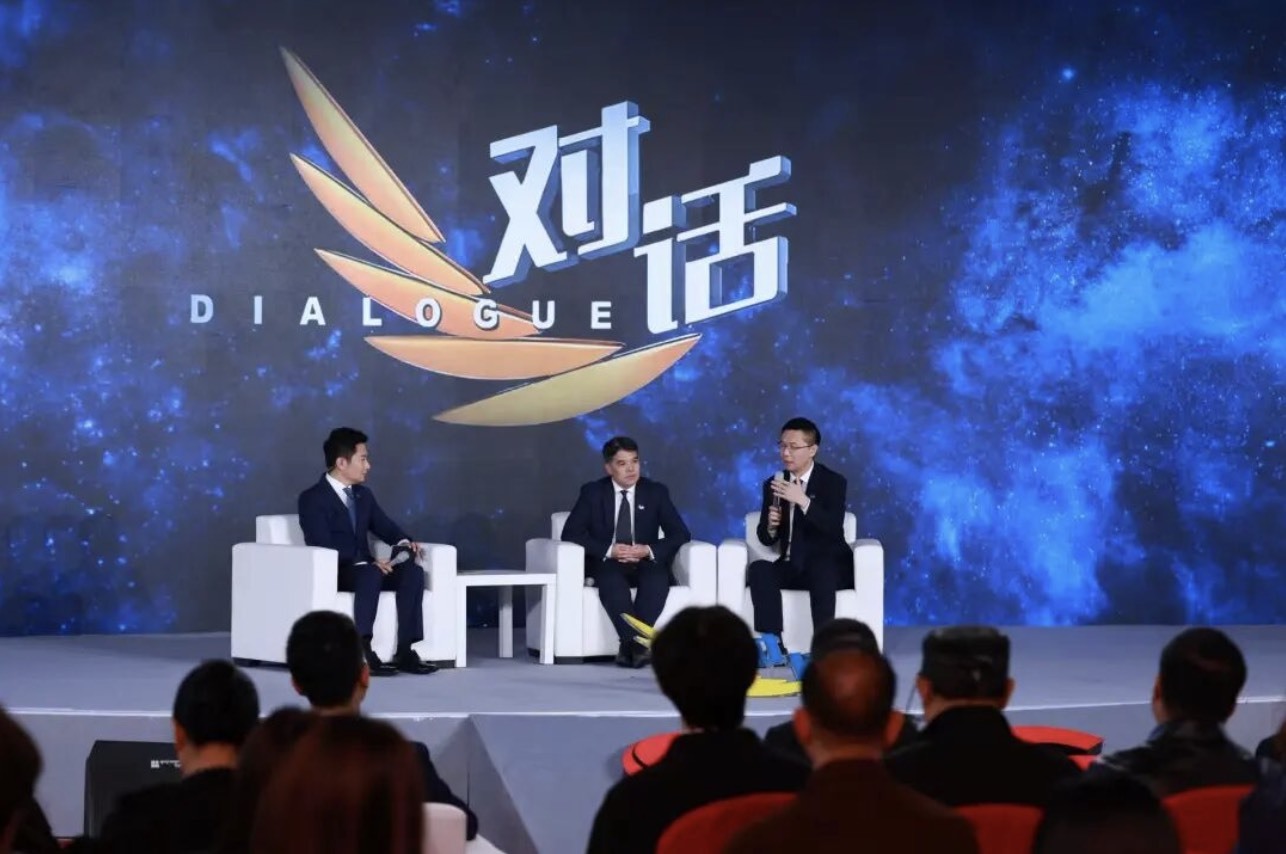
The "15th Five-Year Plan" is the "stabilizing anchor" for China's future economic development
The "15th Five-Year Plan" period is an important stage for consolidating the foundation and making comprehensive efforts toward basically achieving socialist modernization.
Huang Hanquan, Party Secretary and President of the Chinese Academy of Macroeconomic Research, stated: "By formulating plans, we pool collective wisdom and seek input from the people, converging the diverse and multi-level demands of society into a national strategy that ultimately becomes a program of action." He emphasized that the plan provides "a sense of direction and certainty," enabling China's economic ship to break through the waves and sail steadily and far.
Tian Xuan, Dean of the National Institute of Financial Research at Tsinghua University and Associate Dean of the PBC School of Finance, offered a vivid analogy: "If we compare the 15 years to a marathon, the '14th Five-Year Plan' was about warming up and finding the right direction, the '16th Five-Year Plan' is the final sprint, and the '15th Five-Year Plan' in between is the five years that most test endurance and confidence—and it is also the most critical."
New signals: new quality productive forces, the real economy, and the security bottom line
The "newness" of the "15th Five-Year Plan" is reflected in multiple aspects.
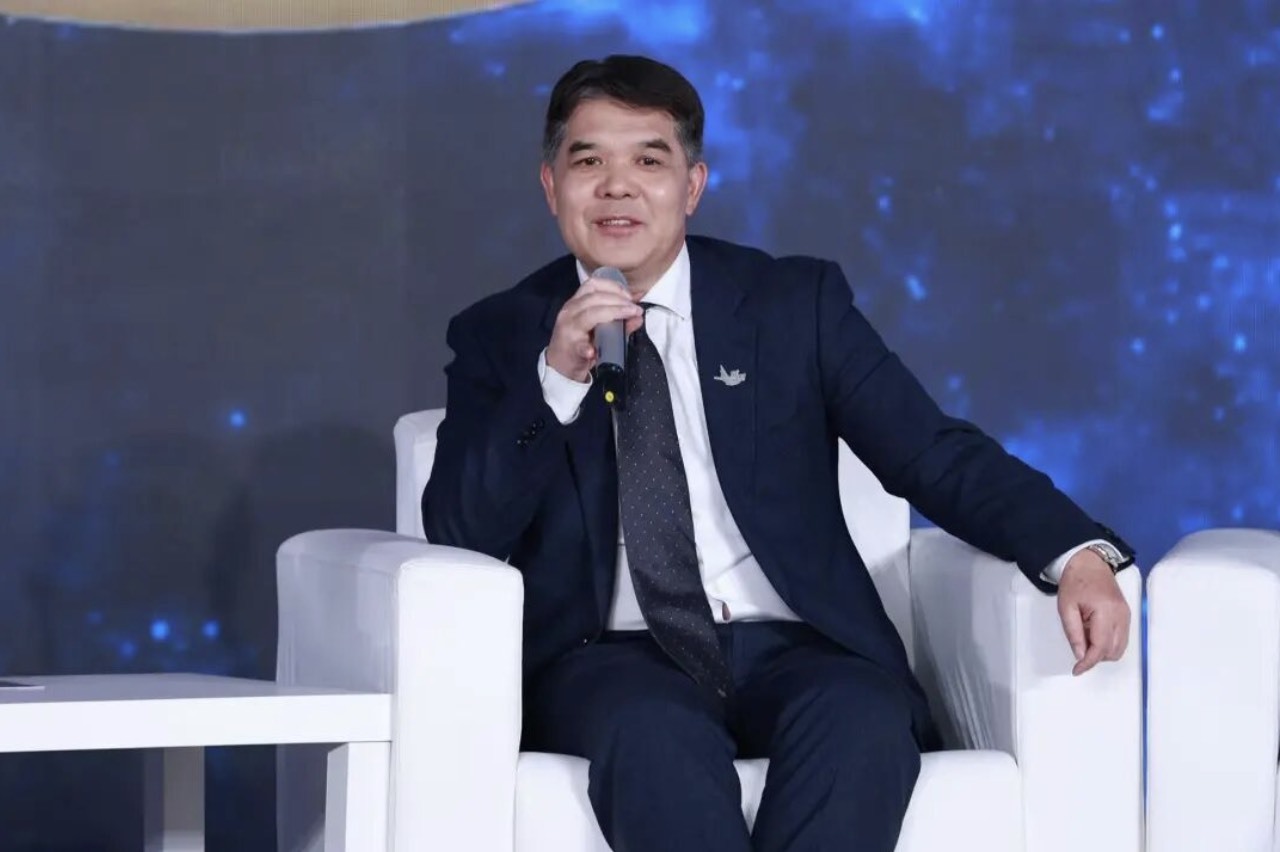
Huang Hanquan emphasized: "New quality productive forces come from the deep integration of technological innovation and industrial innovation, forming emerging industries and future industries. At the same time, traditional industries are transformed and cultivated into new drivers and new engines."

Tian Xuan pointed to three major new signals: first, greater emphasis on the real economy, adhering to a real-economy-centered approach; second, emphasizing the deep integration of technological innovation and industrial innovation; third, emphasizing the security bottom line, coordinating development and security, and ensuring security in multiple areas including the economy, industrial chains, food, environment, and finance.
Industry opportunities: embodied intelligence and the low-altitude economy are favored
The "Recommendations" propose ten major key industry development directions. As "strategic investors," which fields do Huang Hanquan and Tian Xuan favor?
Huang Hanquan: "If I had only one choice, I would choose embodied intelligence. First, it is a direction with sustainable growth potential; second, the scale is large enough that it can be applied across various industries and fields in the future; third, this industry has technological breakthroughs and has reached the stage of commercial implementation."
Tian Xuan's top choice is also embodied intelligence, because its application scenarios are so rich and its market is very large. He also recommends the low-altitude economy: "I think the low-altitude economy is an industry with a substantial market, scenarios, and room for imagination. It has strong spillover effects because the upstream and downstream industrial chains are long, and it can form a complete industrial chain and industrial cluster. At the same time, this industry receives high priority from the state."
From GDP to GNI: a new stage of globalization for China's economy
The "Recommendations" emphasize both GDP (gross domestic product) and GNI (gross national income) simultaneously for the first time.
Huang Hanquan explained: "The Chinese economy is now deeply integrated with the world economy, and China's level of openness has reached a new stage. In the past, it was more about 'bringing in'; now, not only products, technology, capital, services, and management are all 'going out.' I believe the concept of GNI has been proposed at just the right time. We need to advance in an orderly manner through top-level design and standardized management to achieve standardized GNI growth."
Tian Xuan added: "It begins with technology, succeeds through finance, and thrives through industry. In the shift from GDP to GNI, I think finance is also very important. Especially financial support—for example, cross-border capital flows, RMB internationalization, and Chinese financial institutions opening overseas branches to provide full-lifecycle financial services to companies going global, such as credit, risk management, and insurance. Financial support for the real economy can ensure our transition from GDP to GNI—from a Chinese economy to a Chinese people's economy."
Foundation Academy | Foundation Expert - Lao Zhu Lecture Hall (Episode 63): Guo Shutai -- Sharing Hot and Difficult Issues in the Review of Survey and Construction Drawings
下一篇A Star-Studded New Journey, United for Win-Win Success — The 2025 Heli Domestic Marketing Conference Grandly Opens!

2026-09-28 1157 0

2026-09-24 10586 0

2026-09-23 10714 0

2026-09-22 10808 0

Lize City Air Terminal Underground Main Structure Nearing Completion: Maximum Transfer Walk Under 4 Minutes After Operation

Anti-seepage Curtain for Main Lock Pit of CSCEC Port Shenqiu Double-Line Lock Project Completed on Schedule

All Pile Foundations Completed on Quanzhou Baiqi Channel

Hainan Upgrades Housing and Municipal Infrastructure

First Foundation Concrete Pour Successfully Completed for Zambia Kafue West–Muzuma 330kV Transmission Line EPC Project
Hot News

评论 (0)