As China's urbanization rate of permanent residents climbed to 67% by the end of 2024, with the urban permanent resident population reaching 944 million, urban development has fully shifted from incremental expansion to the deep-water zone of stock optimization. Against the backdrop of the era of "massive demolition and construction" slowly coming to an end, "urban renewal"—a grand proposition carrying the mission of revitalizing urban vitality and improving living quality—is reshaping the urban fabric with unprecedented depth and breadth,and also bringing historic opportunities for construction enterprises, the core entities of urban construction, to break through development bottlenecks and reshape core competitiveness.
Policy Dividends: From National Strategy to Trillion-Dollar Market At the national strategic level, "urban renewal" has been placed in a high position.From the clear positioning in the 14th Five-Year Plan outline, to the comprehensive deployment of urban renewal work in recently issued action opinions, to the establishment of special subsidy funds by the central government, and to the intensive introduction of supporting policies and implementation rules by various ministries and local governments, a systematic policy framework covering top-level design, fiscal and tax support, land management, and approval optimization is accelerating its formation. This strong policy tailwind has directly created a blue ocean market with huge potential.In 2024, 66,000 urban renewal projects were implemented nationwide, with a total investment scale of 2.9 trillion yuan; it is expected that by 2030, the total investment in urban renewal is expected to reach the level of 10 trillion yuan. At the same time, its connotation goes far beyond simple housing renovation, but extends to multi-dimensional, all-factor organic renewal such as old residential area renovation, old factory area revitalization, traditional business district upgrading, comprehensive improvement of urban villages, protection and revival of historic districts, revitalization of inefficient industrial land, quality improvement of public spaces, resilience enhancement of infrastructure, and smart community construction. This has opened up unprecedented business increment space for construction enterprises,with project types shifting from new construction projects to refined, diversified, and sustainable stock renewal and function improvement. The strong guidance of policies and the huge demand of the market together constitute the core driving force for construction enterprises to engage in urban renewal.
Role Leap: From "Builder" to "Comprehensive Urban Service Provider" Urban renewal is not a simple replica of traditional new construction projects; its complexity and systematic nature pose new challenges and higher requirements for the core capabilities of construction enterprises. Under the traditional development model, the role of construction enterprises is relatively single, focusing on construction according to drawings. Urban renewal requires enterprises to achieve a fundamental role transformation—from a "party B" that merely provides construction services to a "comprehensive urban service provider" deeply involved in urban governance, operation, and value creation. This transformation requires enterprises to break through traditional construction boundaries, extend forward to planning and design consulting, investment and financing planning, feasibility studies, and extend backward to long-term operation management, asset maintenance, community services, and even industrial introduction. This means that construction enterprises must have strong resource integration capabilities and be able to provide package solutions covering "planning-planning-design-financing-construction-operation-maintenance". Facing the new track, many leading enterprises in the industry have launched multi-dimensional explorations, and their transformation paths and practice models have also provided valuable references for the industry.For example, China Twenty-Two Metallurgical Group actively intervenes in urban diagnosis and renewal planning. In the preliminary planning of urban renewal projects, it invites several leading domestic design institutions to conduct comprehensive urban physical examinations for Tangshan and Shenyang. Shanghai Construction Group continuously innovates spatial scenarios and taps market value during the operation and maintenance stage. Its industry-first "Cultural Heritage Manager" product—a preventive protection platform for the entire life cycle of historic buildings—provides strong technical support for preventive protection and maintenance of historic buildings while also extending its business field from renewal and repair to operation and maintenance. China Construction Fourth Engineering Division explores transforming its profit model from one-time construction to continuous operation. In its Xiamen Weili She project, it adopts the "EPC+O" model, builds a smart management platform, and uniformly rents and manages properties and operates creative markets to increase revenue. It is worth noting thatdue to significant differences in urbanization levels, economic strength, demand structures, development quality, and governance capabilities among regions, their starting points and priorities for urban renewal also vary. For example, the renewal focus of first- and second-tier cities is on functional relief in core areas, comprehensive improvement of old residential areas, transformation and utilization of industrial heritage, and TOD comprehensive development, which place extremely high demands on refinement and composite capabilities; while third- and fourth-tier cities focus more on improving urban infrastructure, enhancing public services, and protecting and repairing historic areas. As "comprehensive urban service providers", construction enterprises also need to deeply study the renewal characteristics of cities at different levels and different regional sectors, and formulate differentiated market strategies and resource investment plans.
Momentum Restructuring: From Technology-Driven to Collaborative Symbiosis In the highly complex and uncertain field of urban renewal, innovation is the core driving force for breaking through and winning, and technological innovation provides strong support for construction enterprises to participate in urban renewal. In the renovation of the old Shanghai Municipal Government Building, Shanghai Construction Group used innovative technologies such as 3,800-ton masonry translation and underground space expansion to revitalize the century-old building; China Construction Third Engineering Division applied the world's first prefabricated "sky-building machine" in the Yipin Hanxin Mansion project, a key old city renovation project in Jiang'an District, Wuhan, achieving intelligent material distribution and unmanned tower crane coordination, increasing efficiency by 30%; and in the Weigang TOD urban renewal benchmark project in Baohe District, Hefei, China Railway Fourth Engineering Group achieved zero safety accidents and refined management of large-scale urban renewal projects through smart management such as attached scaffold electronic patrol systems and digital twin platforms based on BIM+GIS... These innovative practices vividly demonstrate how technology empowerment can forge "hard power" for renewal and push urban renewal to a new height of safety, efficiency, and sustainable development. These "hard powers" have laid a solid foundation for urban renewal, and in the face of its inherent "strong connection" attribute—which requires the integration of multiple functions such as commerce, cultural creativity, residence, and public services, and involves the demands of multiple parties such as the government, residents, and property owners—only by building consensus among multiple entities and constructing a collaborative development community can the deep momentum of urban renewal be truly activated. This means that construction enterprises must actively break down industry barriers,evolve from providing single construction services to integrating resources, building platforms, and serving the ecosystem, reconstructing the value chain in symbiosis and converting new momentum in collaboration. For example, large enterprises should play the role of "chain leader", integrating resources across the entire chain including planning and design, investment and development, engineering construction, and professional operation, to create integrated service capabilities. Small and medium-sized and specialized enterprises need to identify their own "strengths", deepen their efforts in segmented fields such as historic building restoration, green and low-carbon technology application, interior renovation of characteristic spaces, and smart special projects, and follow the path of "specialized, refined, distinctive, and innovative" development. In addition, they should actively embrace cross-border cooperation with technology companies, financial institutions, cultural and creative institutions, and professional consulting agencies to jointly build an open, collaborative, and symbiotic new ecosystem for the urban renewal industry. The trillion-dollar market size, complex and diverse renewal needs, and model changes brought by technological innovation have jointly pushed urban renewal to the center of the construction industry stage. For construction enterprises, this is not only a business growth point but also a profound transformation battle that determines future survival and development space.Whether they can seize this historic opportunity and reshape core competitiveness in the resonance of policy and market will determine their future industry position.
Innovative Practice | Shenyuan Geotechnical's New Shield Tail Grouting Material and Green Construction Technology Win Municipal Research Project Approval, Supporting the Industry's Green Development!
下一篇Launch | China Railway Equipment's Dual-Mode Shield Machine Bores the Fortezza High-Speed Rail Tunnel in Italy
2026-09-28 1157 0
2026-09-24 10586 0
2026-09-23 10714 0
2026-09-22 10808 0

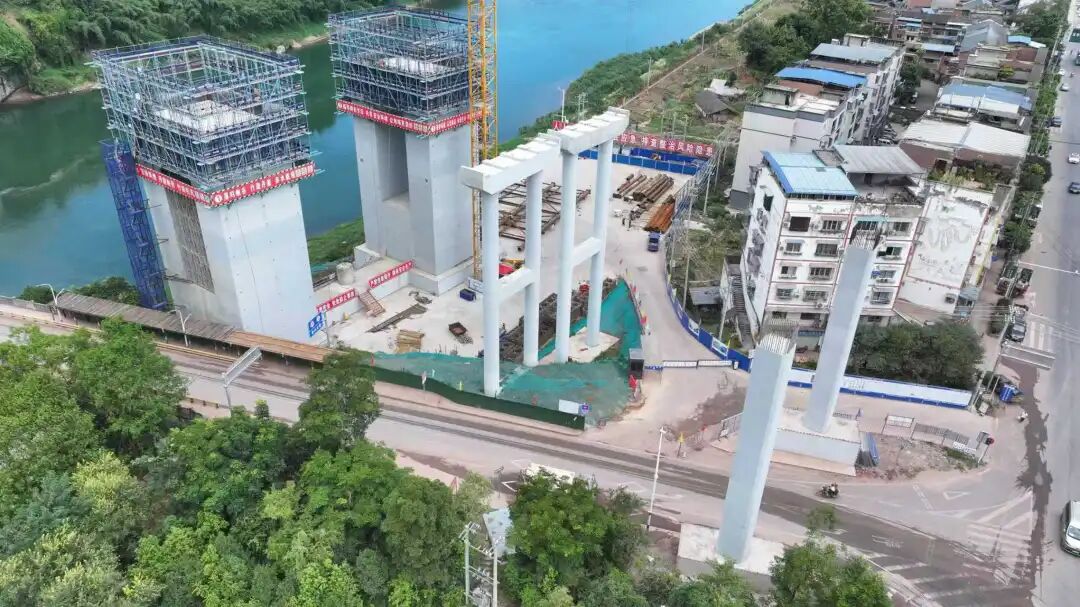
Lize City Air Terminal Underground Main Structure Nearing Completion: Maximum Transfer Walk Under 4 Minutes After Operation

Anti-seepage Curtain for Main Lock Pit of CSCEC Port Shenqiu Double-Line Lock Project Completed on Schedule

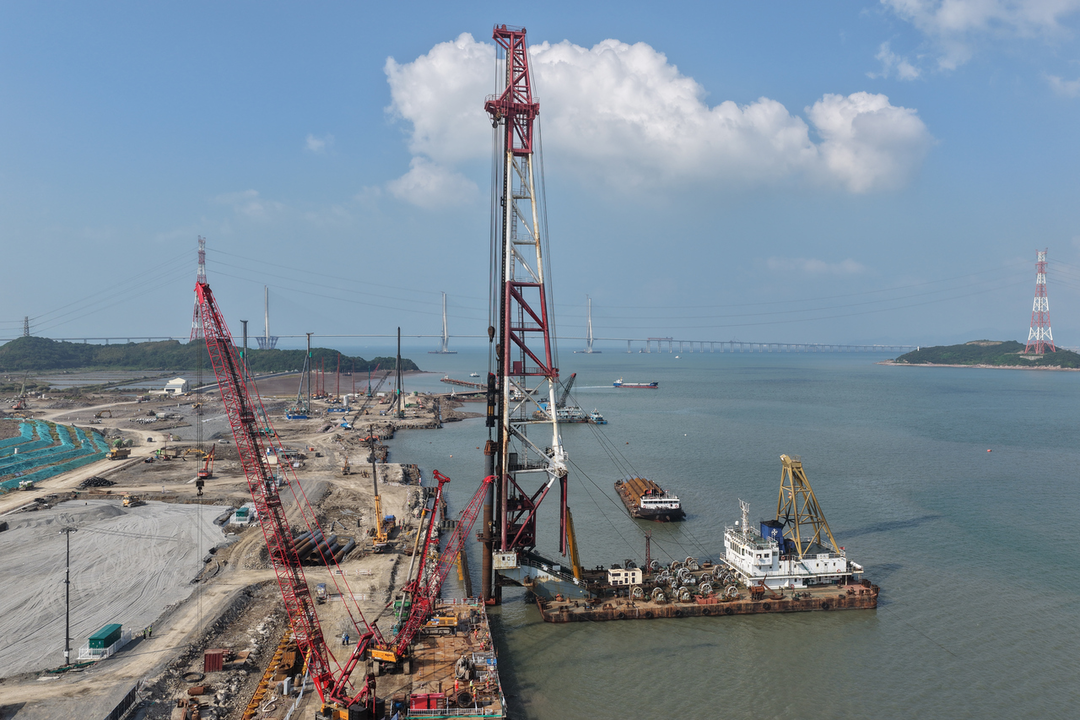
All Pile Foundations Completed on Quanzhou Baiqi Channel

Hainan Upgrades Housing and Municipal Infrastructure

First Foundation Concrete Pour Successfully Completed for Zambia Kafue West–Muzuma 330kV Transmission Line EPC Project
Hot News

评论 (0)