In the first half of 2025, excavator sales reached 120,520 units, up 16.8% year on year; loader sales stood at 64,769 units, up 13.6% year on year, with both growth rates exceeding double digits. Judging from excavator and loader sales as well as a number of other industry data, the construction machinery industry is entering a new cycle of recovery.
However, the sales growth cannot conceal deep-seated concerns. In this cycle, the sales growth of excavators and other products is far smaller than in the recovery phase of the previous cycle, while sales of categories such as tower cranes and construction cranes continue to decline. The construction machinery industry is mired in intensifying involution and overcapacity, and how to curb vicious competition and absorb excess capacity has become a core problem the industry urgently needs to solve.
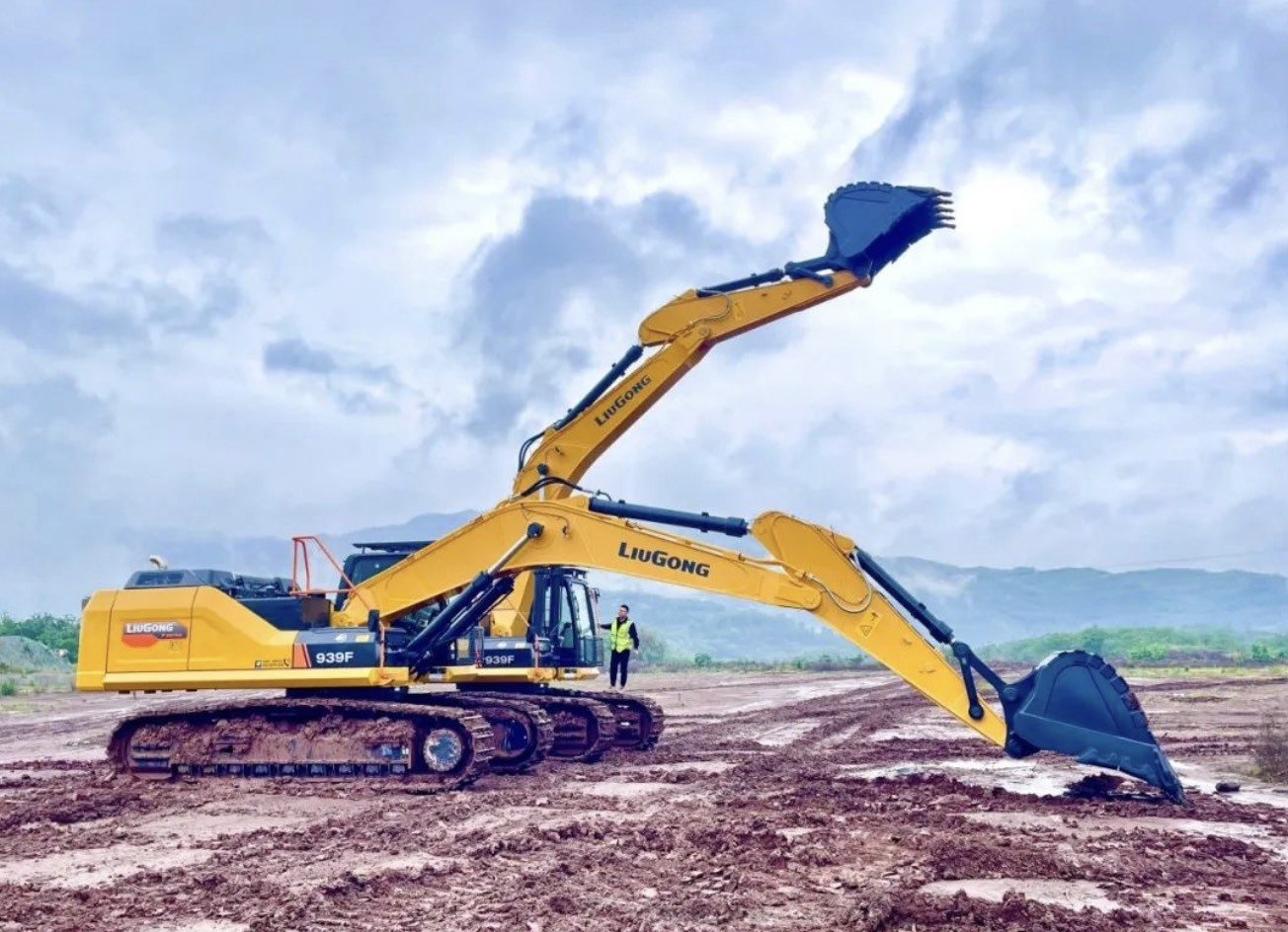
I. The industry ecosystem of involution
In recent years, the trend of "involution" has swept across numerous industries and has become a topic frequently on the lips of many in construction machinery circles. The vicious competition phenomena spawned by involution—price wars, low-level repetitive R&D, and disorderly capacity expansion—are severe, not only eroding corporate profits but also damaging the image and competitiveness of China's construction machinery in the global market.
Take price wars as an example. Companies relentlessly pursue low prices, which may indeed attract certain customers and generate certain returns in the short term, but in the long run it is not a good strategy. Many companies treat price wars as an immediately effective marketing tool while ignoring the consequences: you cut prices, I cut prices too, and the result is that everyone reduces their own returns without gaining any improvement in market competitiveness.
Cutting prices is easy, raising them is hard; even in a good year, the phenomenon of selling more and losing more may occur. According to statistics, over the past three years the terminal transaction price of 20-ton excavators has fallen by nearly 20% cumulatively, vicious competition has caused the industry's average gross margin to plummet, and some small and medium-sized enterprises have fallen into the operational dilemma of "growth in volume without growth in revenue."
In addition, there are involution practices such as credit sales with low or even zero down payments and "lifetime free service." The ultimate result of "involution" is ever-higher risks, ever more labor expended, and no increase in returns.
Recently, from official authorities to all walks of life, there has been a conscious effort to rectify the chaos of involution. On June 27, the Standing Committee of the National People's Congress deliberated and passed the Anti-Unfair Competition Law (Amendment), with this revision focusing on tackling "involution-style" competition and proposing that goods must not be sold at prices below cost. To break the "involution-style" competition in the construction machinery industry, President Su Zimeng emphasized in his report: enterprises should be selective in expanding products and capacity, accelerate technological innovation, improve product performance and quality, and develop mid-to-high-end products that suit construction scenarios and have competitive advantages.
Some industry participants have also recognized the harm caused by involution and begun to gradually take practical action to ease price wars and the like. LiuGong dealer Yunnan Huiyou LiuGong Construction Machinery Co., Ltd. announced that starting from February 13, 2025, it would appropriately adjust the prices of some excavator products. Among them: crawler excavators under 20 tons were raised by 10,000 yuan, crawler excavators of 20 to 50 tons by 20,000 yuan, and crawler excavators above 50 tons by 30,000 yuan.
Over the past two years, the construction machinery market has seen multiple waves of price adjustments. In December 2023, Sany Hefei Xiangyuan officially announced price increases, raising the minimum price of small excavators by 5,000 yuan and that of large excavators by 20,000 yuan starting from January 1, 2024; in mid-2024, Shandong Lingong dealers began raising prices for small excavators, with dealers reporting an increase of 5,000 yuan per unit for small excavators under 10t; not long ago, Sany Heavy Truck also announced that starting from January 1, 2025, it would raise prices across its entire range of new energy heavy trucks nationwide.
Only when ineffective involution is gradually abandoned by the industry can China's construction machinery formally enter a new stage of development of "pricing by quality." However, with so many industry participants, some enterprises lacking core competitiveness may find it hard to abandon involution in price and service for the time being, and the road against involution still has a long way to go.
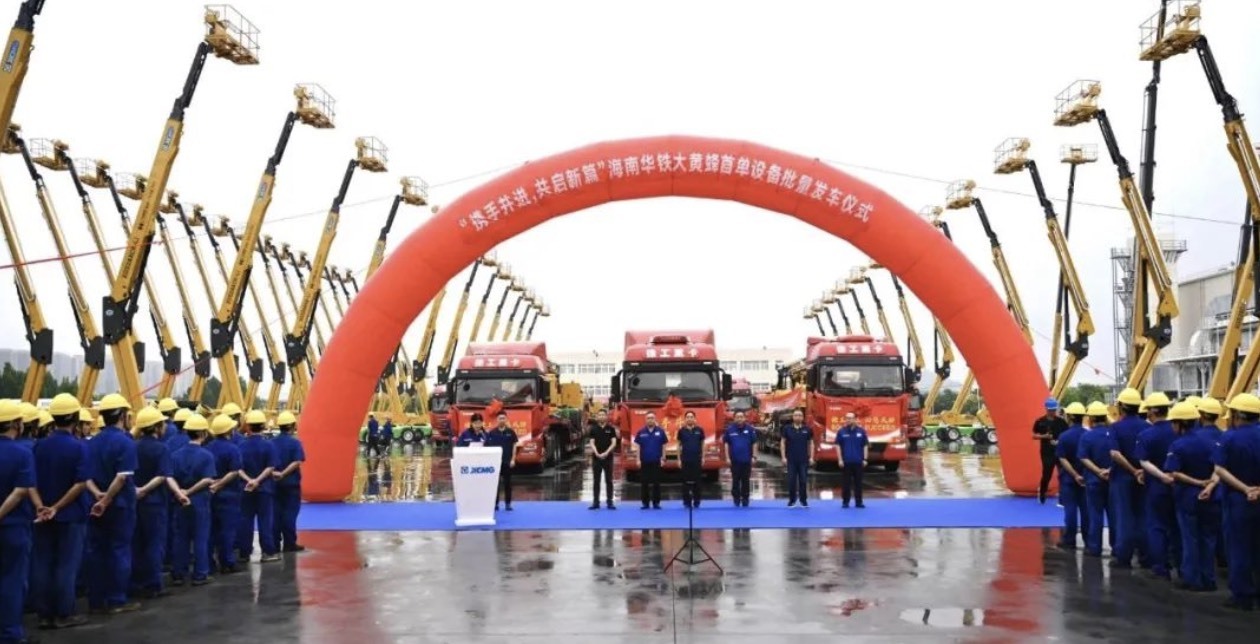
II. The development puzzle of overcapacity
Overcapacity is a persistent challenge facing many industries and one of the main triggers of involution.
The development of the photovoltaic industry is a classic case of overcapacity. According to statistics, the price of photovoltaic modules fell 70% in two years, from 2 yuan/W in 2022 to 1 yuan/W in 2023, and after 2024 dropped to around 0.65 yuan, below the industry's cost price. Some European users even use solar panels as garden fences—the reason behind this bizarre phenomenon is that Chinese photovoltaic panels are simply too cheap.
People's Daily recently published an article titled "Achieving High-Quality Development While Breaking 'Involution-Style' Competition," specifically pointing out the problems of the photovoltaic industry: "On one hand, annual capacity in every segment of the industry exceeds 1,100 gigawatts, resulting in a阶段性 supply exceeding demand. On the other hand, some local governments are still keen on attracting investment and launching projects, offering land, policies, and funds."
The overcapacity of the photovoltaic industry is a lesson from the past, and construction machinery is facing the same problem. Over the past decade or so, China's infrastructure boom drove the rapid development of construction machinery, but as the economy enters a new normal and the growth of real estate development and infrastructure investment slows, demand for construction machinery has declined accordingly, and the industry has inevitably fallen into the dilemma of overcapacity; yet the business model of major enterprises relying on low prices to seize share has not been transformed in time.
The shrinking of market demand superimposed on the inertia of corporate expansion has led to a surge in market保有量 and a sharp drop in capacity utilization to a low level, with the industry rapidly sliding from an incremental market to stock competition. A Goldman Sachs research report holds that in 2023 China's construction machinery capacity was about 7.2 times domestic market demand and 1.1 times global demand, with capacity utilization at only about 30%. For example, the aerial work platform market developed rapidly in earlier years, once attracting construction machinery leading enterprises and cross-industry enterprises to rush in, but as market保有量 surged, the problem of overproduction became increasingly prominent, and this blue ocean market quickly turned into a red ocean.
In light of the current situation of overcapacity in the construction machinery industry and industry development trends, enterprises should adopt the following countermeasures:
Promote capacity integration and optimization: eliminate outdated capacity through mergers and acquisitions and restructuring; leading enterprises can integrate the idle capacity of small and medium-sized enterprises to reduce low-level repetitive construction; at the same time, shut down inefficient production lines, focus on core product lines, and improve overall capacity utilization.
Expand diversified markets to absorb capacity: while consolidating existing export markets, further deepen emerging markets along the "Belt and Road," in Southeast Asia, Africa, and elsewhere, and develop customized products for local construction scenarios; at the same time, explore non-traditional application fields, such as extending construction machinery technology to agricultural machinery and specialized mining equipment, to broaden demand scenarios.
Develop intelligent and flexible production: leverage IoT and big data technologies to build a dynamic capacity monitoring platform, adjust production plans in real time according to market demand, and achieve "production determined by sales"; introduce flexible production lines to enhance rapid response capability for small-batch, multi-category products and avoid excessive production of a single product.
Strengthen supply chain collaboration to reduce costs: establish information-sharing mechanisms with core suppliers and dealers, reduce ineffective capacity stockpiling in upstream and downstream segments through joint forecasting of market demand and coordinated inventory adjustment; implement modular production, increase parts commonality, lower the marginal cost of multi-category production, and enhance capacity flexibility.
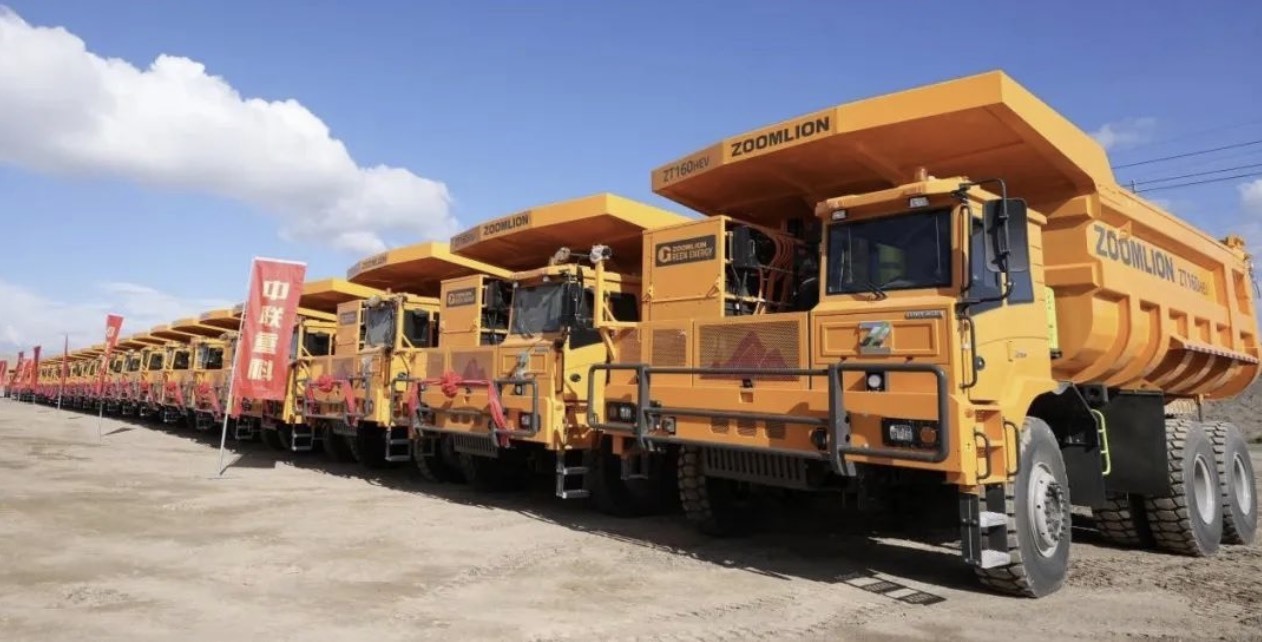
China's construction machinery industry is at the intersection of bottoming out and recovery; the domestic market is recovering relatively slowly, and overseas markets are increasingly becoming the main growth driver. But if enterprises continue to blindly pursue the scale of production and sales without changing their development thinking, the outcome in overseas markets can be imagined. The key to curbing vicious competition lies first in strictly controlling disorderly "volume," balancing scale and resilience, and breaking the cycle of "expansion—overcapacity—involution"; only then can the industry achieve long-term healthy development.
CRCHI Mining Concrete Spraying Vehicle Receives Major Upgrade, Boosting Efficient Wet Spray Support in Underground Mines
下一篇LiuGong 8128H Loaders Delivered in Batch to Key Customer in North Africa

2026-10-18 0 0

2026-10-18 0 0

2026-10-17 0 0

2026-09-23 10598 0
Lize City Air Terminal Underground Main Structure Nearing Completion: Maximum Transfer Walk Under 4 Minutes After Operation
Anti-seepage Curtain for Main Lock Pit of CSCEC Port Shenqiu Double-Line Lock Project Completed on Schedule
All Pile Foundations Completed on Quanzhou Baiqi Channel

Hainan Upgrades Housing and Municipal Infrastructure

First Foundation Concrete Pour Successfully Completed for Zambia Kafue West–Muzuma 330kV Transmission Line EPC Project
Hot News

评论 (0)