In 2025, China's construction machinery export value continued to grow. According to customs data, in May China's construction machinery import and export trade totaled USD 5.238 billion, of which exports reached USD 5.024 billion, up 8.51% year on year. Cumulative exports from January to May amounted to USD 23.095 billion, up 8.98% year on year.
As macroeconomic growth slows and domestic investment in real estate and infrastructure remains sluggish, the construction machinery industry is going full throttle to expand into overseas markets, with leading enterprises now deriving more than half of their revenue from overseas. In the process of expanding into overseas markets, Chinese companies are also deeply practicing the localized operating philosophy and customized innovation paths of multinational corporations, continuously accumulating advantages in products, production supply chains, R&D, channels and organization, and are shifting from exporting products to exporting industry and pursuing global expansion.
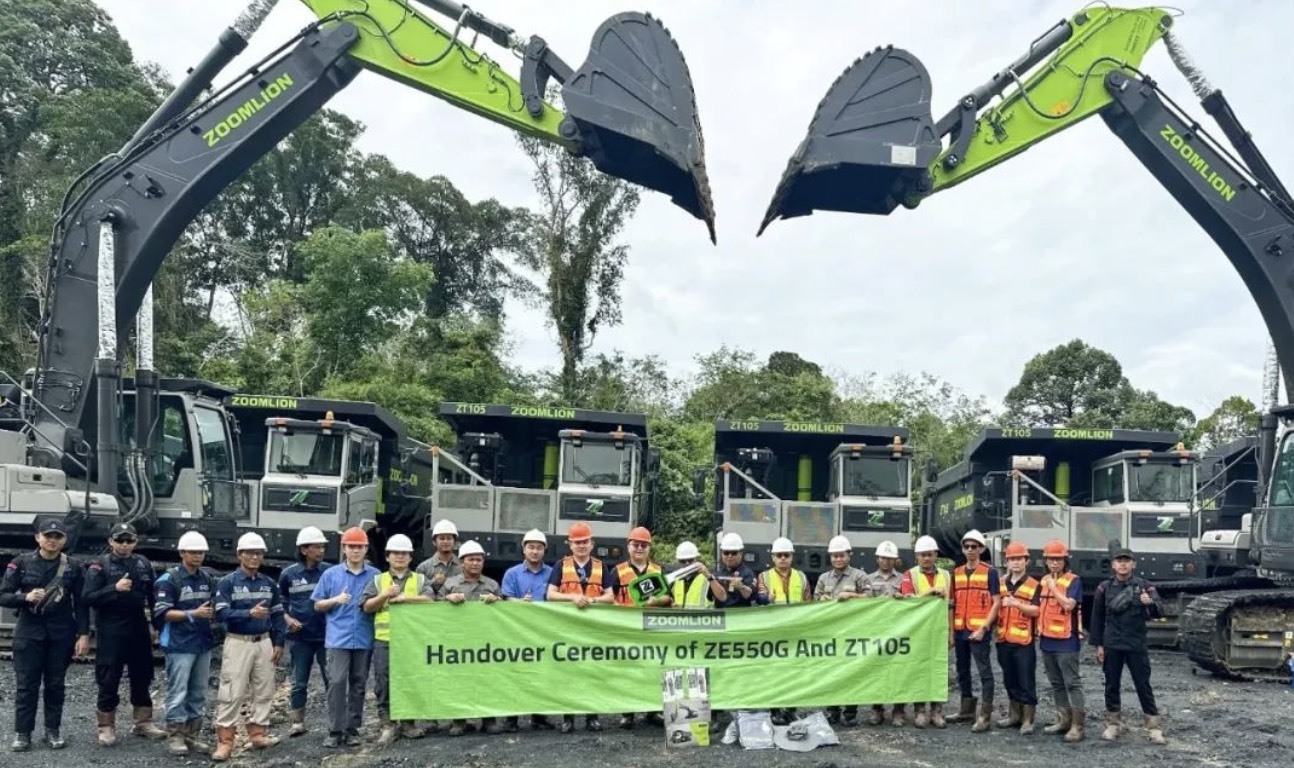
01 | Customized products open up high-end markets
In the past, Chinese construction machinery enterprises often used "cost-effectiveness" as their calling card; today, more companies are choosing "customization" to break through. By thoroughly decoding the technical standards, application-scenario requirements and policy rules of target markets, they polish products from "generic models" into "dedicated models," ultimately opening the door to high-end markets. Behind this shift is the support of Chinese companies' increasingly mature technological strength.
Europe, as an important market for construction machinery, has always been highly competitive. Since entering the European market, the Chinese brand Sunward has gradually established its own brand position through deep market insight and precise positioning. After years of unremitting efforts, Sunward's excavators and other products rank among the top in European market sales, with its excavator fleet in Europe reaching 40,000 units. In addition, at the Bauma exhibition in Munich, Germany, held in April this year, several models of rotary drilling rigs specially customized by Sunward for Europe sold out on the spot, bringing in orders exceeding RMB 100 million.
Sunward not only sells products in the European market but also provides a complete set of solutions. By gaining an in-depth understanding of the needs and characteristics of the European market, it carries out customized functional modifications for customers in different countries and regions with differentiated product requirements across various application fields. This initiative not only meets customers' actual needs but also enhances the market competitiveness of its products.
Different regional markets differ significantly in technical standards, construction scenarios and policy rules. The essence of the customization strategy is to grasp these differences and enable products to leap from "price competition" to "value competition"—this is the key for Chinese construction machinery enterprises to build high-end brand recognition and open up more high-end markets.
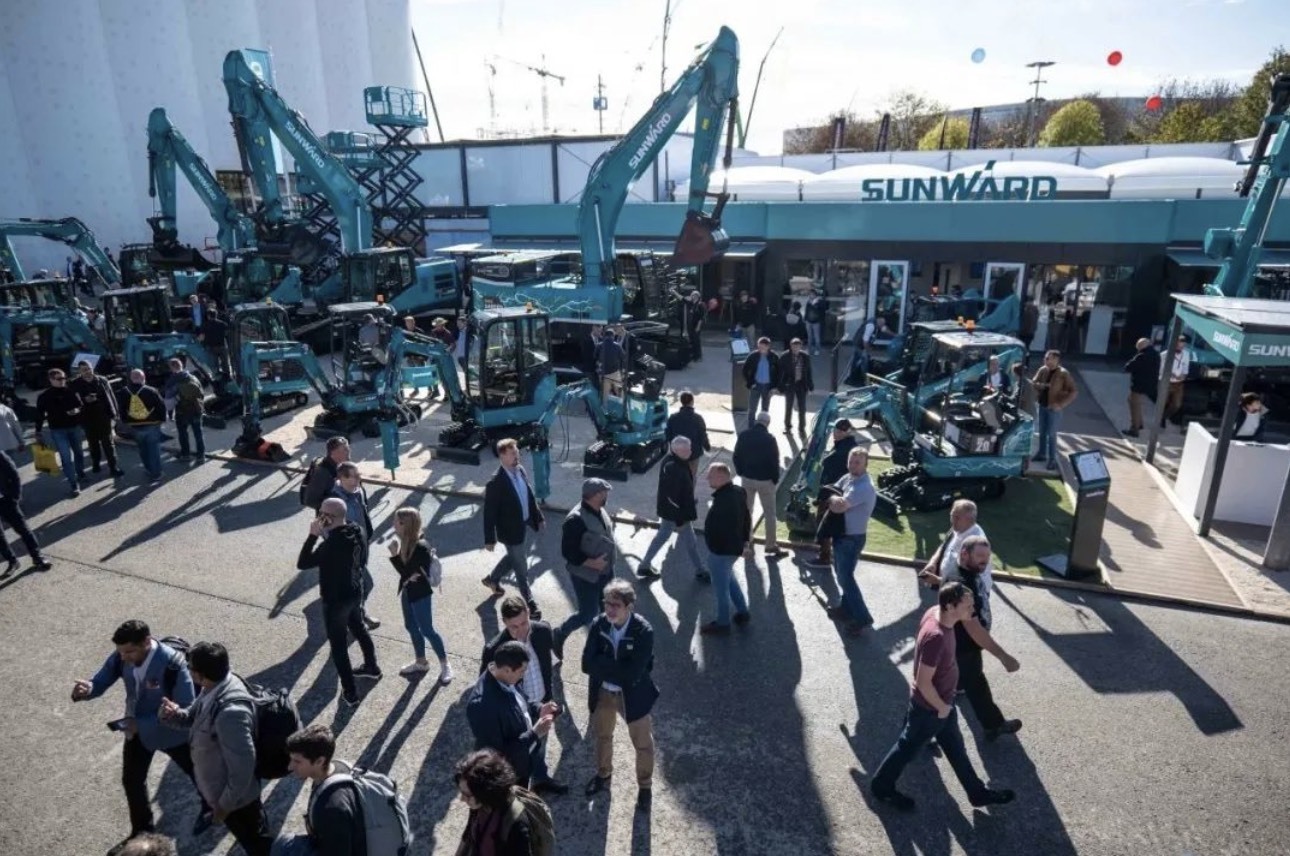
02 | Deep integration of localized manufacturing
To further enhance product competitiveness, Chinese construction machinery enterprises are actively advancing localized manufacturing in overseas markets, building a manufacturing network of "local response + global collaboration" through deep rooting in supply chains, talent and technology.
Take the Phase II project of Zoomlion's German plant as an example. Based on Zoomlion's Wilbert factory in Germany, the project expands production workshops and carries out industrial expansion and upgrading to further strengthen localized light assembly. At the same time, a product display area will be added to form a comprehensive overseas production base integrating product display, sales, production and service. Once fully operational, it can produce more than 1,000 units of construction machinery and equipment annually, with an output value of approximately USD 300 million.
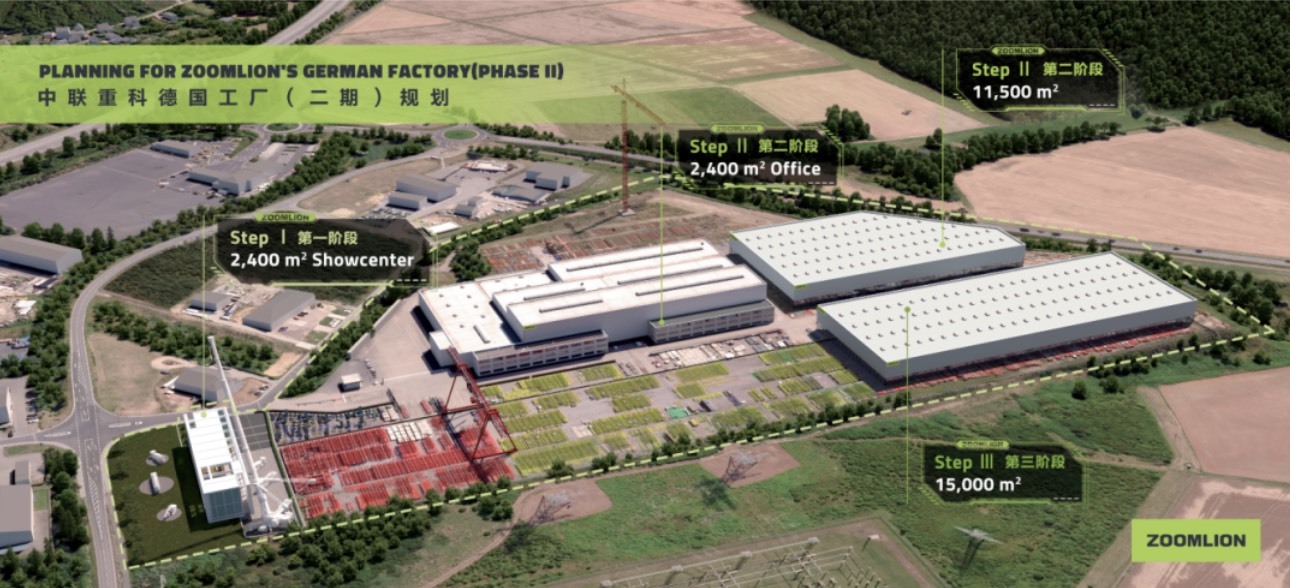
The Phase II project of Zoomlion's German plant will continue to strengthen Zoomlion's end-to-end connection with customers and the market. Leveraging the advantages of the end market, the project will develop and manufacture products that better suit the local market and are more diverse and broader in range. At the same time, the base will also serve as a maintenance base for local and surrounding customers, further improving response speed and providing customers with more convenient and efficient services. Currently, Zoomlion has 11 R&D and manufacturing bases and 400 outlets overseas, with products covering more than 170 countries and regions; in 2024, overseas revenue accounted for more than 51%.
By deploying production, supply chains and service systems in target markets, enterprises can not only circumvent trade barriers such as tariffs and anti-dumping investigations, but also reduce production costs, shorten product delivery cycles, get closer to the market and respond to customer needs in a timely manner. This is a key measure for enterprises to embed themselves in the mid-to-high end of the global industrial chain.
03 | Global ecosystem coordination and value deepening: from "selling products" to "building an ecosystem"
The competitiveness of single-product output is limited. Chinese construction machinery enterprises are building a global industrial ecosystem through a value network of "products + services + ecosystem," transforming "transactional relationships" into "symbiotic relationships" and achieving a leap from "market entry" to "market leadership."
In their internationalization journey, enterprises such as Zoomlion and LiuGong are actively expanding into overseas markets. Through EU CE certification and mutual recognition of ASEAN standards, they have successfully introduced products such as electric mixer trucks and wheel loaders into international markets. This not only reflects the companies' own technological strength and product quality, but also earns reputation for China's construction machinery industry in international markets and enhances the international influence of Chinese brands.
Relying on the ASEAN standards mutual recognition mechanism, Guangxi LiuGong promotes standards in Indonesia, and its electric wheel loaders have captured more than 24% of the Indonesian market. Through in-depth study of local market needs and standards and regulations, LiuGong ensures its products meet Indonesia's local standard requirements. At the same time, it actively cooperates with relevant local institutions and enterprises in Indonesia to promote mutual recognition and exchange on standards, laying a solid foundation for product market access and promotion.
Global market competition has escalated from single-product competition to ecosystem competition. The essence of Chinese construction machinery enterprises' "ecosystem coordination" is to build a value network of "products-services-standards-partners" through mutual recognition of standards, joint channel building and integrated services—this is the key to breaking through regional market barriers and establishing long-term competitive advantages.
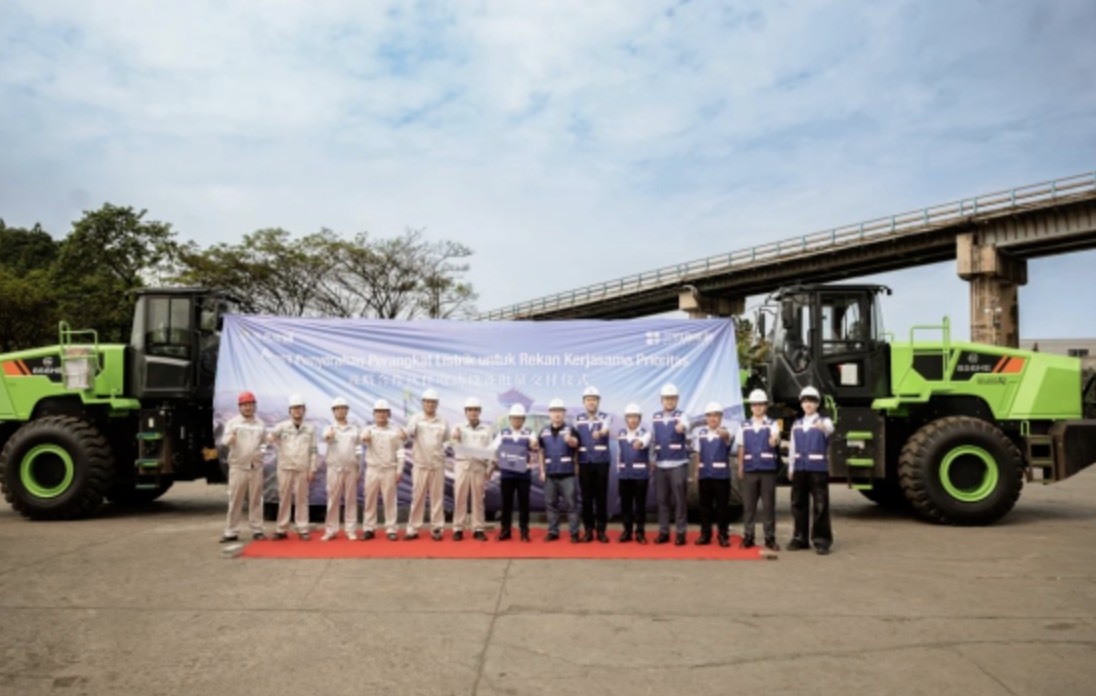
For Chinese construction machinery to go global, achieving the transition from "going out" to "going in" and "going up" absolutely cannot rely on a single advantage; it requires the combined punch of precise customization, deep localization and global ecosystem coordination. Only by continuously deepening these three capabilities can Chinese construction machinery advance steadily and go far in the global market and truly achieve the leap from a "manufacturing giant" to a "manufacturing powerhouse."
Dai Hegen Holds Talks with Suhail Mohammed Al Mazrouei, UAE Minister of Energy and Infrastructure
下一篇Building a New Future for a Green, Low-Carbon Industrial Chain | North Industries Group (Beifang股份) Honored as a "Meritorious Partner" by Jiangxi Copper Group

2025-10-11 12785 0

2025-10-11 12334 0

2025-10-11 12498 0
2025-09-11 12042 0

Lize City Air Terminal Underground Main Structure Nearing Completion: Maximum Transfer Walk Under 4 Minutes After Operation

Anti-seepage Curtain for Main Lock Pit of CSCEC Port Shenqiu Double-Line Lock Project Completed on Schedule

All Pile Foundations Completed on Quanzhou Baiqi Channel

Hainan Upgrades Housing and Municipal Infrastructure

First Foundation Concrete Pour Successfully Completed for Zambia Kafue West–Muzuma 330kV Transmission Line EPC Project
Hot News

评论 (0)