In recent years, affected by factors such as the continued downturn in the real estate market and excess market inventory, tower crane sales have plummeted. The latest statistics show that in April 2025, tower crane sales were 482 units, down 42.1% year-on-year, of which domestic market sales were 266 units, a year-on-year decline of 61.3%, with obvious pressure on the industry's traditional demand side.
It is worth noting that against the backdrop of shrinking demand in traditional application fields such as real estate and infrastructure, new energy engineering, overseas emerging markets and other fields have shown certain growth potential, pushing the tower crane industry to accelerate into a period of structural adjustment. Industry enterprises are actively exploring new growth curves by expanding tower crane application scenarios and optimizing overseas market layouts.
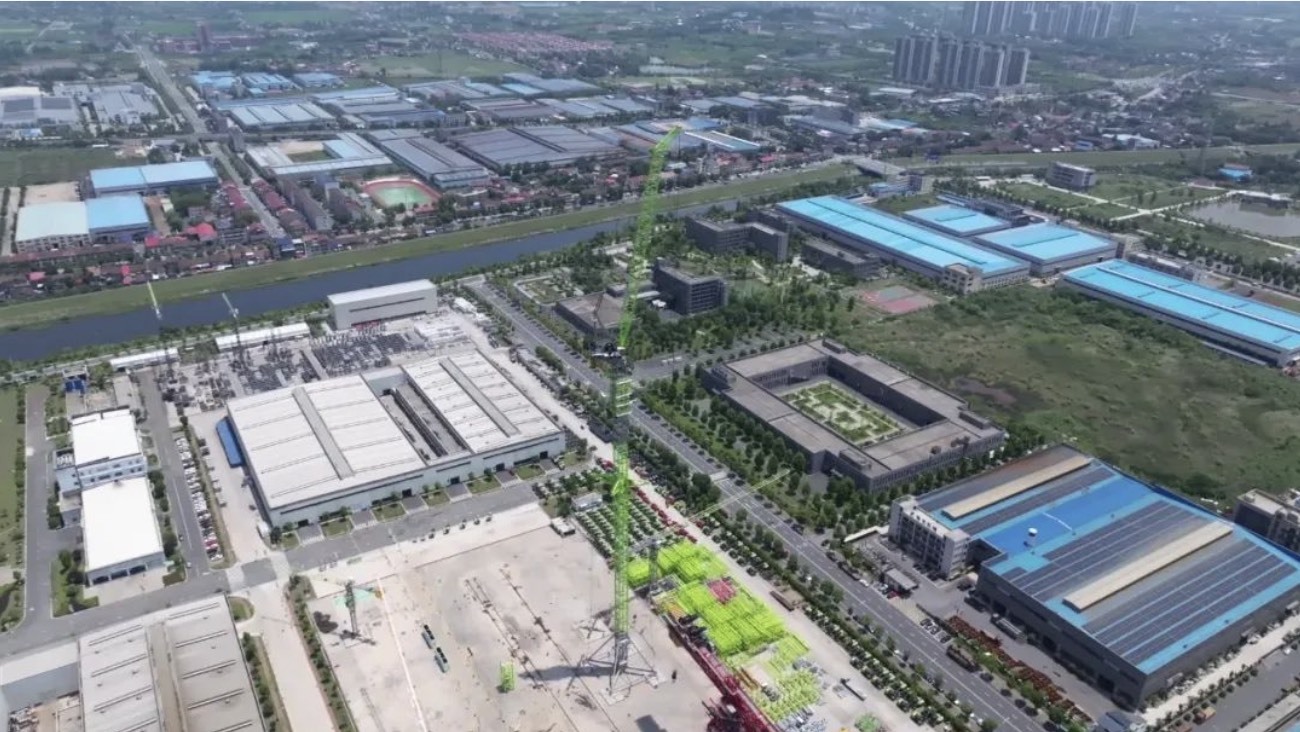
I. Tower Crane Market Situation
Full-year sales in 2024 had already plunged from 45,000 units in 2021 to 7,400 units, a drop of more than 83%, with monthly sales falling year-on-year for 12 consecutive months. The weakness of the domestic demand market is particularly prominent: the domestic sales share fell to 72.88% in 2024, significantly shrinking from the peak of over 90% in 2021.
In 2025, the tower crane market continues its deep adjustment, with cumulative sales of 1,796 units from January to April, a year-on-year decline of 38.66%.
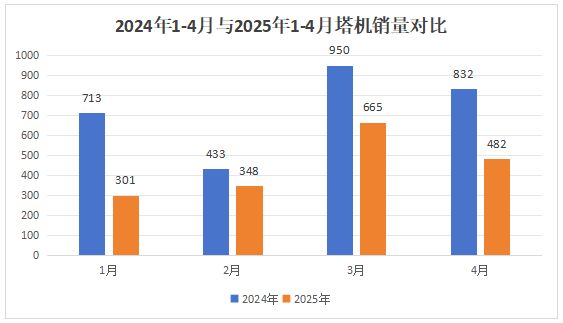
In the long term, the continued downturn in the real estate market is undoubtedly the biggest culprit behind the downward trend of the tower crane market. As indispensable equipment for building construction, tower cranes' market demand is closely tied to the pace of economic development. The prolonged downturn in the real estate market has ultimately led to low willingness among real estate enterprises to start construction, directly resulting in insufficient tower crane utilization rates, and purchase willingness and payment capacity on the equipment demand side have begun to decline.
Entering 2025, this trend has still not improved significantly. According to data from the National Bureau of Statistics, from January to April 2025, national real estate development investment was 2,773 billion yuan, down 10.3% year-on-year, with the decline widening by 0.4 percentage points compared with January-March; newly started and completed areas were 178.36 million square meters and 156.48 million square meters respectively, down 23.8% and 16.9% year-on-year respectively.
On the other hand, the tower crane market also faces a situation of excess inventory, further exacerbating the shrinkage of new machine sales. Data released by the China Construction Machinery Association shows that as of the end of 2023, China's tower crane inventory was approximately 306,000 to 331,000 units, but the market does not need so much equipment. Chai Zhaoyi, vice chairman of Shaanxi Construction Machinery Co., Ltd., pointed out: "Given the current state of China's real estate market and infrastructure, demand can only support about 150,000 to 160,000 units." By this reasoning, the utilization rate of tower crane equipment is less than 50%, while for an industry to develop healthily, the equipment utilization rate should remain at least above 66% to have sufficient development momentum.
In addition to new machine sales, the tower crane rental market is also struggling. The large inventory in the tower crane market and oversupply have, to a certain extent, forced tower crane manufacturers and leasing companies to attract customers through price cuts in order to maintain market share. The result of the price war is an overall decline in new tower crane sales and rental prices, increasingly fierce market competition, and lower industry profits.
II. Industry Opportunities
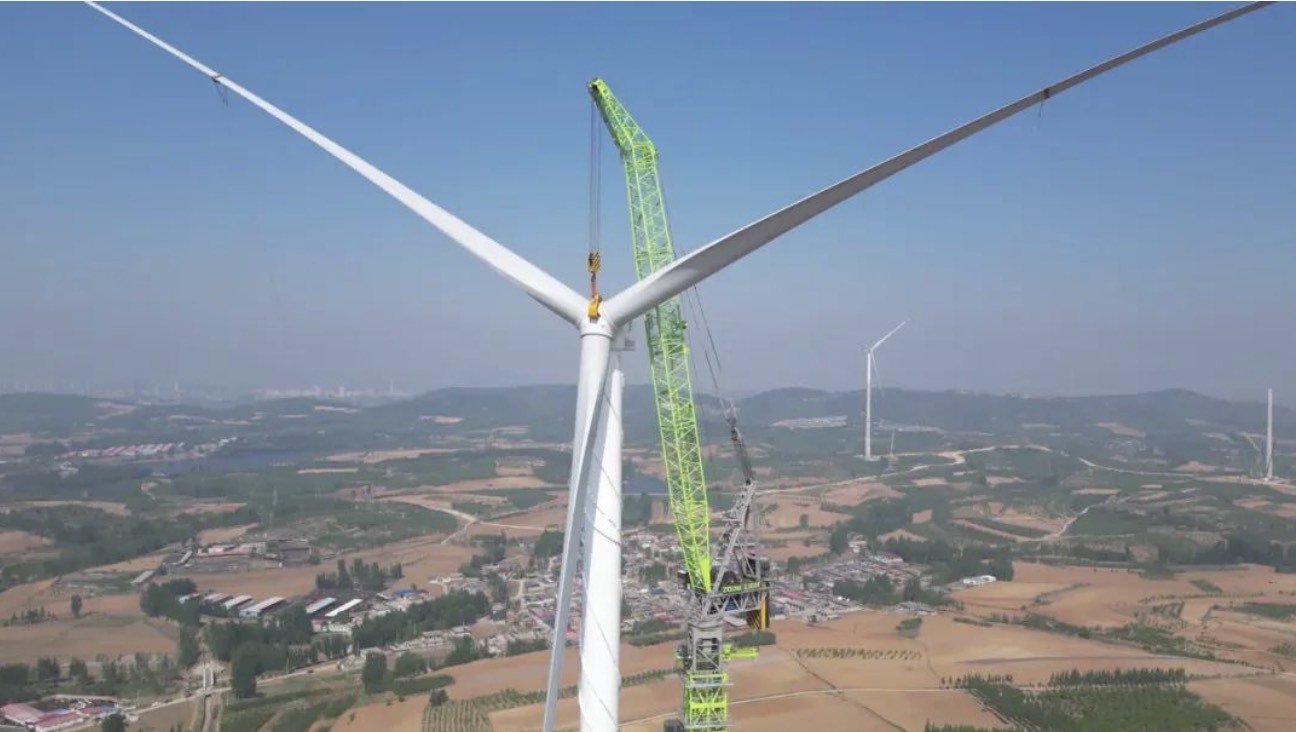
1. Expanding application scenarios, explosive demand for wind power hoisting
With real estate projects continuing to slump, expanding the application of tower cranes in other scenarios is an important strategy. In addition to the traditional building construction field, tower cranes can also be applied in bridge construction, ports and wharves, petrochemical facility construction, and new energy construction.
Especially in the new energy field, in recent years large-megawatt wind turbines have risen rapidly, with hub heights increasing from 100 meters to 180 meters, 190 meters or even higher, placing higher demands on the hoisting performance of wind power hoisting equipment and bringing opportunities to the tower crane market.
Recently, Zoomlion's globally highest 216-meter wind power luffing jib tower crane LW2800A-200NA was officially released in Changde, adding super equipment for onshore ultra-high wind turbine hoisting. Since first launching the LW2340-180NA wind power luffing jib tower crane in 2021, Zoomlion has continued to promote product iteration and upgrading to meet market demand, and the series products have been successfully applied in various wind power scenarios such as mountains, hills, lakes and plains. The release and commissioning of the LW2800A-200NA marks another leap for Zoomlion in the field of wind power luffing jib tower cranes, achieving a substantial jump in wind power tower crane height from 180 meters to 216 meters.
In the future, as wind power continues to develop, it will also continue to provide certain development opportunities for the tower crane market. For example, a CICC research report raised its forecast for China's new wind power hoisting volume in 2025 from 110-120 GW to 115-125 GW, with an even more optimistic outlook for onshore wind power installations.
2. Breaking through in overseas markets
Now that tower crane supply in the domestic market is excessive, seeking new market growth points in international markets has become the industry's main breakthrough strategy. In terms of export sales, from January to April this year, tower crane exports were 810 units, accounting for 45.09%. In 2024, tower crane exports were 2,010 units, doubling from 900 units in 2022, with their share of total sales rising from less than 5% to 27.12%.
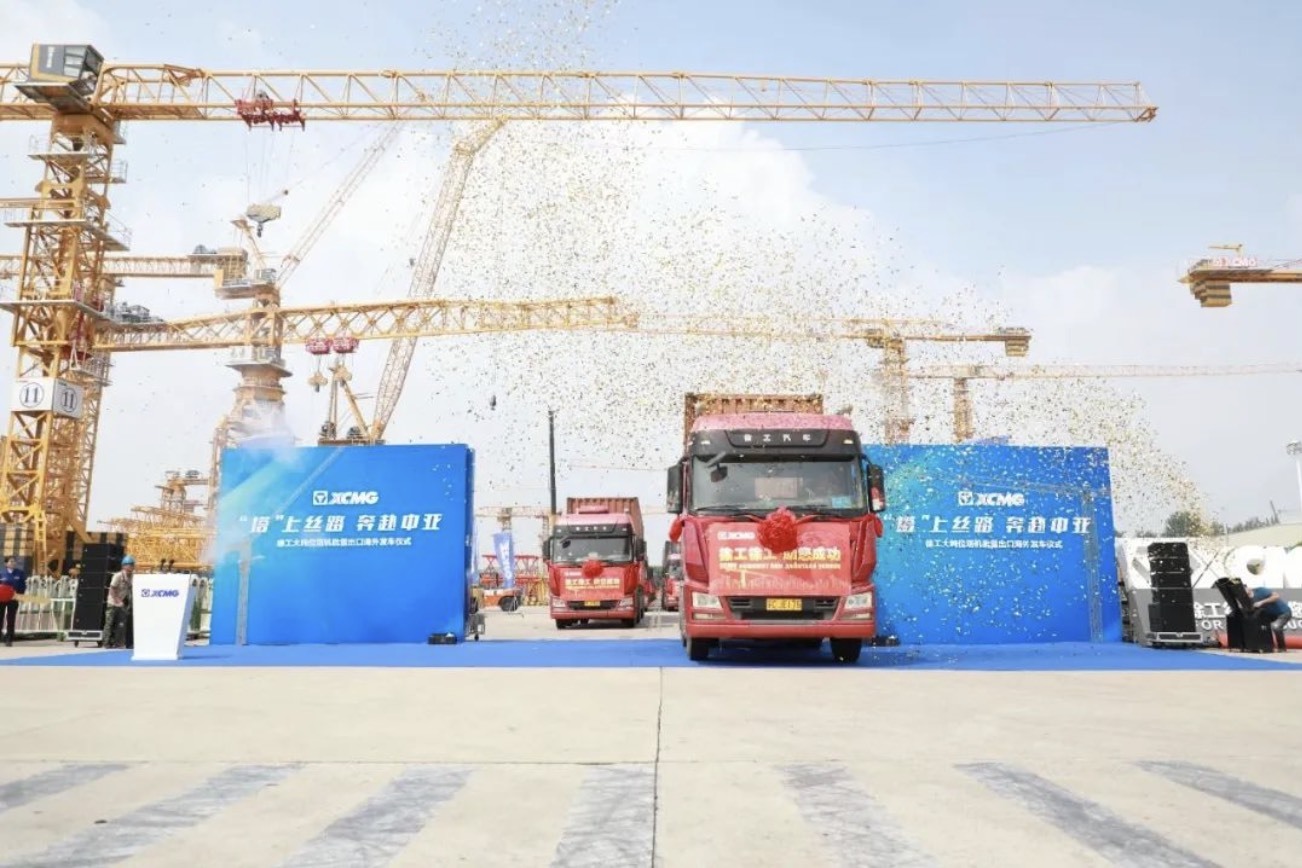
In 2025, overseas markets will remain the focus of tower crane development, bringing a new round of growth opportunities to the industry. For example, at Zoomlion's start-of-year kickoff event, long lines of trailers loaded with tower cranes and construction hoists rolled out majestically from the Zoomlion tower crane smart factory in Changde, with a total value of more than 700 million yuan, of which overseas orders accounted for more than 70%, showing an obvious growth trend.
In recent years, infrastructure construction demand in emerging markets such as Southeast Asia, the Middle East and Africa has continued to increase. At the same time, with the advancement of the "Belt and Road" initiative, the path for Chinese enterprises to go global has also become smoother. Enterprises should seize this opportunity, strengthen cooperation with relevant countries and regions, and increase the export share of their products. At the same time, they should focus on brand building, improve product quality and after-sales service levels, establish a good brand image, and enhance the competitiveness of their products in the international market.
3. Urban renewal brings new market demand
In the past two years, in order to promote the stabilization and recovery of the real estate market, the state has successively introduced a series of policy measures. Among them, in terms of increasing housing security, the government, through methods such as monetized resettlement, has newly implemented the renovation of 1 million units of urban villages and dilapidated housing, helping to improve living environments and meet residents' housing needs.
The renovation of urban villages and old residential communities is an important part of urban renewal. At present, China's urban development has entered an important period of urban renewal, and it is expected that for a long time to come, the task of urban renovation and renewal will become increasingly heavy, thereby bringing certain market demand to the tower crane industry and becoming an important driving force for the domestic demand market for tower cranes.
The continued decline in tower crane sales has sounded an alarm for the industry. But crises often also contain opportunities. In this era of change, tower crane enterprises need to be market-oriented, actively adjust their strategies, and enhance their competitiveness by expanding diversified application scenarios, revitalizing the existing market, and optimizing overseas market layouts. Only in this way can they remain invincible in fierce market competition.
Notice on the Issuance of the Measures for Ranking Engineering Consulting Units of the China Engineering Consulting Association
下一篇CRCHI High-End Agricultural Machinery Debuts at the 2025 Xinjiang International Agricultural Machinery Expo
2026-09-28 1157 0
2026-09-24 10586 0
2026-09-23 10714 0
2026-09-22 10808 0

Lize City Air Terminal Underground Main Structure Nearing Completion: Maximum Transfer Walk Under 4 Minutes After Operation

Anti-seepage Curtain for Main Lock Pit of CSCEC Port Shenqiu Double-Line Lock Project Completed on Schedule

All Pile Foundations Completed on Quanzhou Baiqi Channel

Hainan Upgrades Housing and Municipal Infrastructure
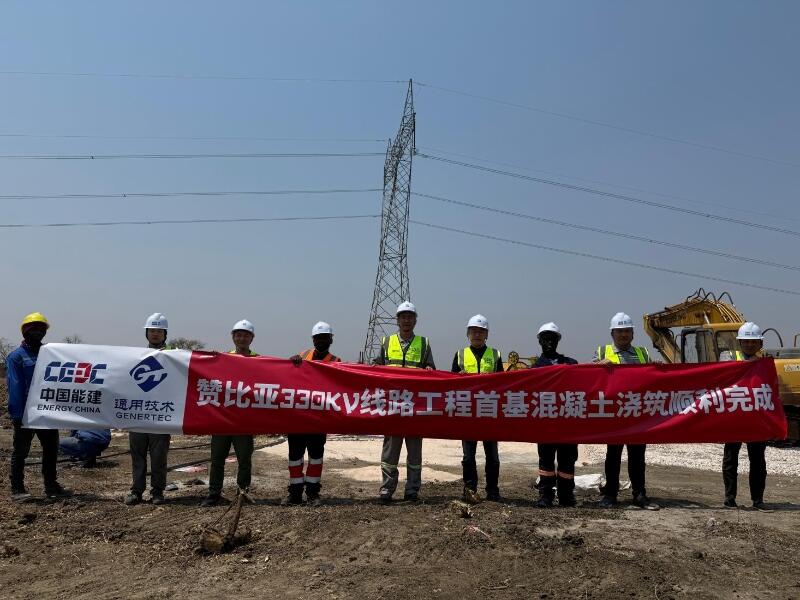
First Foundation Concrete Pour Successfully Completed for Zambia Kafue West–Muzuma 330kV Transmission Line EPC Project
Hot News

评论 (0)