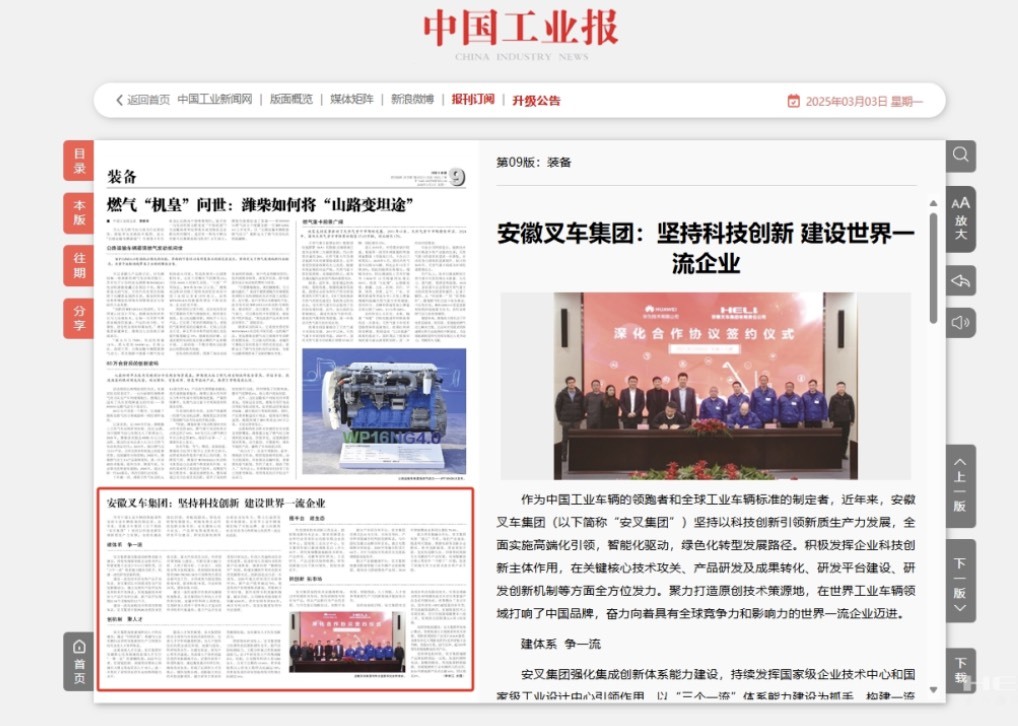
"Made in China" is accelerating toward high-end, intelligent, and green development, and the industrial vehicle industry is undergoing a profound transformation. Anhui Forklift Group (Anhui Heli Co., Ltd. is its core holding subsidiary), whose main economic indicators have ranked first in China's industrial vehicle industry for more than 30 consecutive years, is accelerating its pace of digital transformation and intelligent innovation, actively creating new models of intelligent manufacturing, developing new intelligent and green industries, cultivating new drivers of intelligent services, and consolidating new paradigms of operation and management. Production and operation efficiency has improved markedly, the business structure has continued to optimize, and new drivers and new vitality for development have continued to grow.
From 2020 to 2023, Heli's overall labor productivity increased by 34.84%, the product development cycle was shortened by 30.18%, and per capita sales increased by 19.09%. In 2023, revenue from Heli's intelligent logistics business segment rose 42% year on year, and AGV sales increased 127% year on year. In 2024, the main economic indicators of Anhui Forklift Group reached new highs: operating revenue of 18.07 billion yuan, up 4% year on year; total profit of more than 1.9 billion yuan, up 7% year on year; and vehicle sales of 340,000 units, up 16% year on year, including 126,000 units exported, up 34% year on year; export earnings reached US$1 billion, up 24% year on year.
Take the "required course" well seize the "commanding heights"
Industrial vehicles are an important branch of construction machinery. Their main products include forklifts, tractors, stackers, loaders, AGVs (automated guided vehicles), and others. They are widely used in all sectors of the national economy and are important equipment for logistics handling and loading and unloading.
At present, the wave of electrification and intelligence in the industrial vehicle industry is surging. In 2024, China's sales of electric forklifts were 946,300 units and internal combustion forklifts 339,300 units, with electric forklifts accounting for 73.61% of sales. The application of intelligent logistics equipment such as forklift mobile robots is also expanding. In 2023, domestic sales of forklift mobile robots reached 19,500 units, up 46.6% year on year.
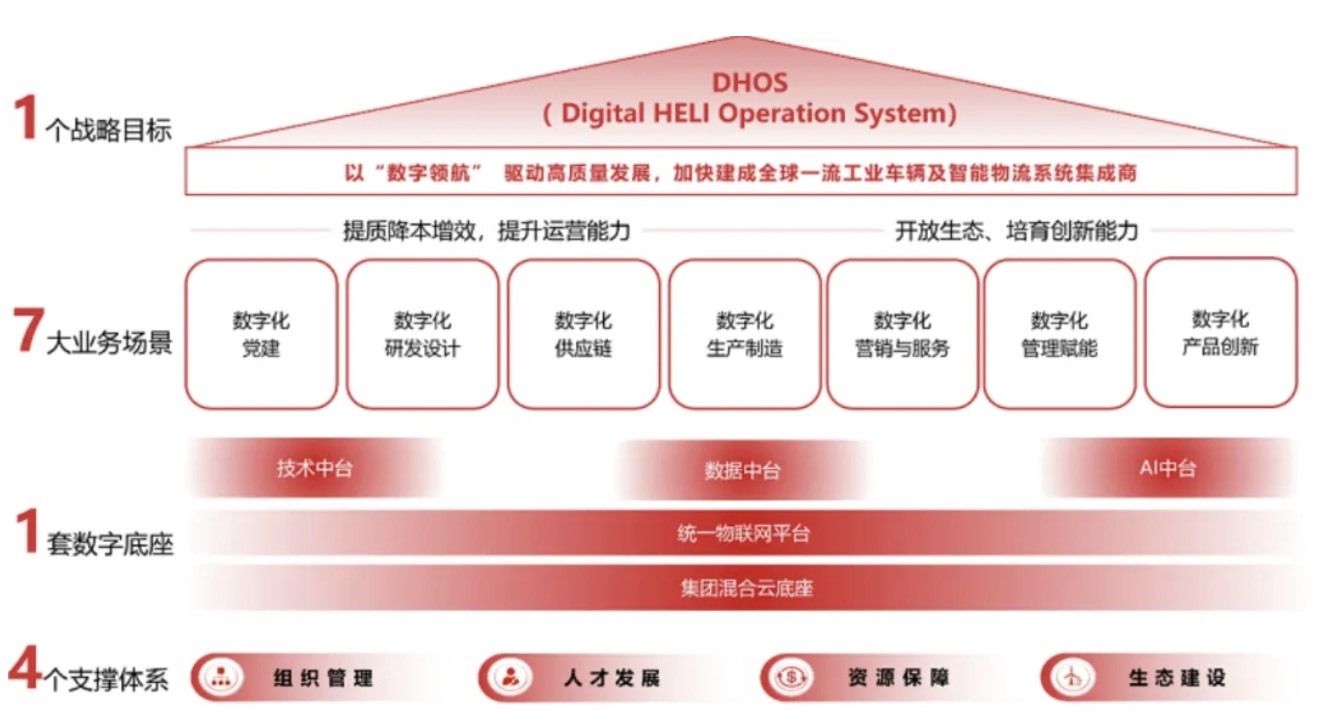
Against the backdrop of profound changes in the industry, how should enterprises recognize, respond to, and seek change? "It should be said that digital transformation and intelligent innovation are no longer a 'multiple-choice question,' but a 'required course' concerning the long-term development of enterprises," said Xu Yingming, assistant general manager of Anhui Forklift Group. Heli has formulated a special plan for digital transformation, put forward the strategic vision of "Digital and Intelligent Heli 2025," established the "1714" strategic framework (1 strategic goal, 7 major business scenarios, 1 digital foundation, and 4 support systems), and built a distinctive "Digital Heli Operation System (DHOS)."
Xu Yingming believes that large-scale personalized customization, the urgent need to increase service revenue, and seizing the next commanding heights of industry development are the three major challenges driving enterprises to accelerate digital transformation and intelligent innovation. At present, China's forklift industry has many product models, small batch sizes, and short delivery times, and traditional production models are hard pressed to meet market demand. Heli achieves flexible production through intelligent manufacturing, shortening the product development cycle by 30.18% between 2020 and 2023 and responding quickly to customer needs.
Heli uses digital transformation to connect the aftermarket service chain. In 2023, revenue from its intelligent logistics business grew 42%, accelerating its shift from "selling products" to "selling products + selling services." "The first half of the logistics handling equipment manufacturing industry was fuel vehicles, the second half is electric vehicles, and the next game is intelligent logistics centered on unmanned vehicles, unmanned driving, and unmanned systems," Xu Yingming said. As an industry leader, Heli should actively embrace industry trends, seize the next competitive track of intelligent logistics, deploy innovative products such as AGVs and unmanned forklifts, and drive the industry's upgrade from "equipment manufacturing" to "system solutions."
Promote systemic change build a co-creation ecosystem
Digital transformation is not only a technological revolution, but also a systemic change from philosophy to ecosystem.
On February 10, Anhui Forklift Group and Huawei held a signing ceremony in Hefei for a deepened cooperation agreement. Under the agreement, the two sides will deepen cooperation in new quality productive forces innovation fields such as digital transformation, intelligent logistics, artificial intelligence, and talent cultivation.
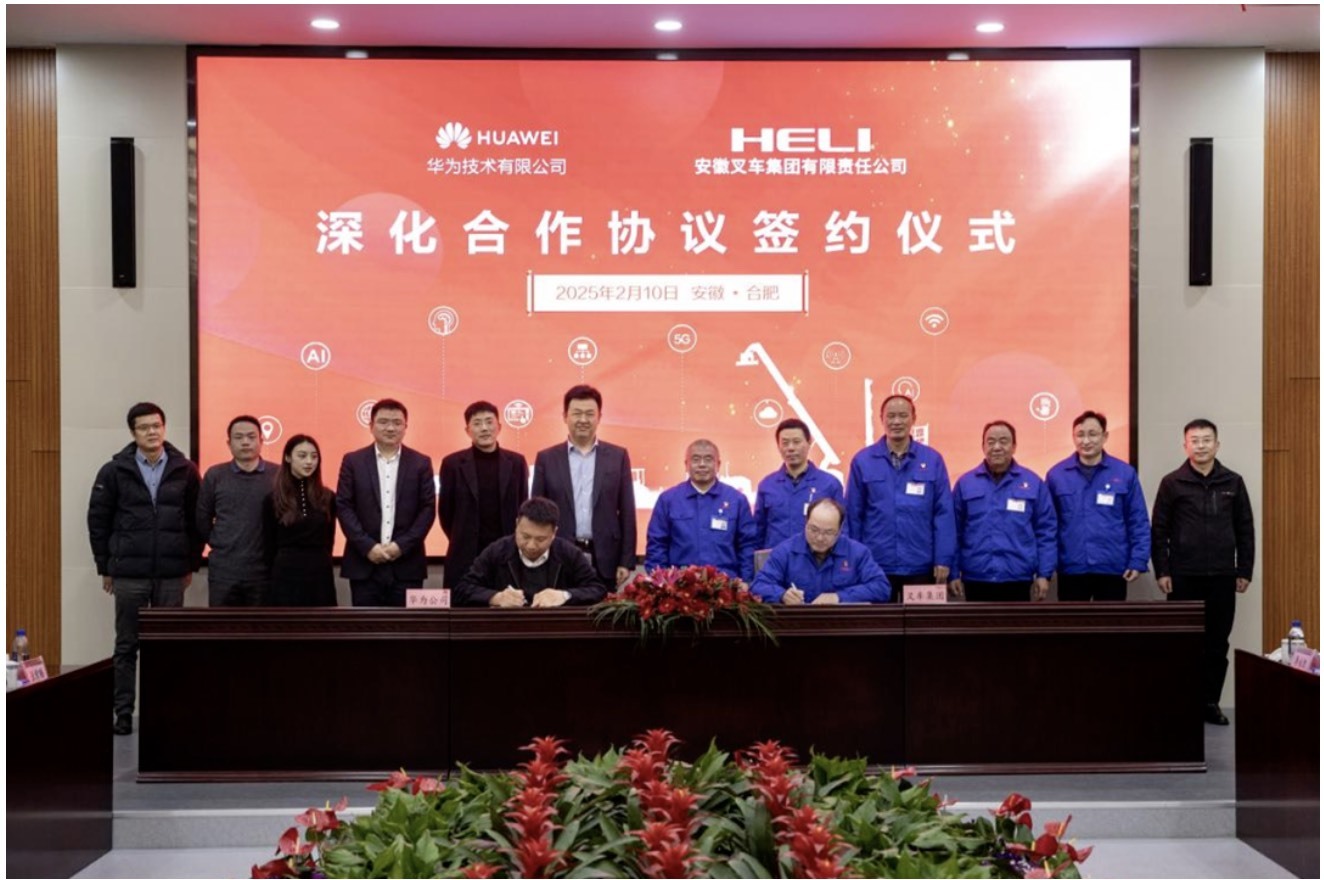
Research reports from relevant securities firms noted that the cooperation between Anhui Forklift Group and Huawei is expected to become a demonstration case of the integration of traditional manufacturing and technology enterprises, driving more warehousing and logistics enterprises to explore digital transformation paths and improving the overall logistics efficiency of the industry. The intelligent logistics solutions developed by the two sides are expected to capture global market share in fields such as intelligent forklifts, unmanned warehousing, and intelligent logistics, reshaping the competitive landscape of intelligent logistics.
In recent years, Heli has achieved a series of results in multiple fields of digital transformation and intelligent innovation. In intelligent manufacturing, with information systems such as ERP, MES, and WMS as the core, it has advanced the intelligent upgrading of production line equipment. Heli has built efficient smart factories that are real-time, collaborative, transparent, and digital, and has been rated as having 3 provincial-level smart factories and 6 provincial-level digital workshops, and was included in the Ministry of Industry and Information Technology's 2024 list of 5G smart factories.
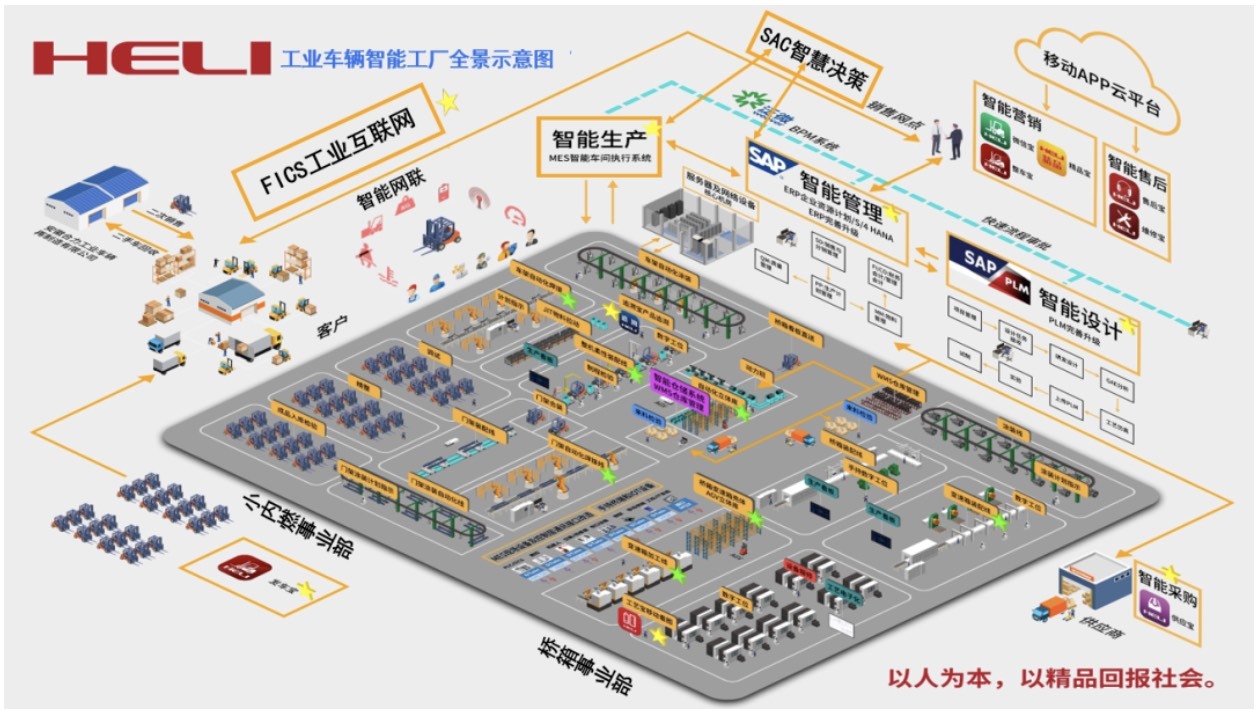
In intelligent green industries, it has strengthened the application of new energy technologies and next-generation information technologies such as 5G, artificial intelligence, and digital twins in products and services, comprehensively advanced the upgrading and replacement of forklift products, and gradually formed a development mainline of electrification, intelligence, and connectivity.
In intelligent services, it has built the Heli FICS (Feikesi) industrial internet platform, providing reliable IoT intelligent terminals that comprehensively connect and perceive forklift status and collect multi-dimensional data such as forklift equipment, drivers, and driving environments. Through PC-side web backend applications, mobile WeChat mini-program applications, and mobile App applications, it provides users with business systems for various scenarios.
In operation and management, it has deeply implemented and applied the enterprise resource planning (ERP) system, improved the application standard system for internal control compliance and business process management (BPM), integrated production, supply, sales, personnel, finance, and materials and other production and operation factors and links within the enterprise into an organic whole, achieved horizontal integration of business functions, and gradually realized rapid response, agile manufacturing, and efficient service.
As an industry leader, Heli is committed to leveraging its brand influence, gathering upstream and downstream industrial resources around digital transformation and intelligent innovation, and building an industrial co-creation ecosystem. Under the leadership and organization of Heli, 30 units across the upstream and downstream "industry, academia, research, application, and finance" of intelligent industrial vehicles jointly participated in establishing the Anhui Province Intelligent Industrial Vehicle Industry Innovation Alliance, carrying out joint research on common industry technologies and jointly building and sharing industry ecosystem resources.
Break through difficulties and pain points strive to make steady and long-term progress
For Heli, there are currently three practical difficulties and pain points in the digital and intelligent process: cybersecurity, talent gaps, and data barriers.
Heli's overseas business is developing rapidly, and digital transformation projects need to fully consider the requirements of overseas markets in terms of cybersecurity and user experience. Intelligent innovation requires enterprises to strengthen their reserve of technical talent in artificial intelligence, big data, and the Internet of Things, which is a common shortcoming of traditional manufacturing enterprises. The deeper the integration of digitalization and business, the higher the requirements for cross-system integration and connectivity and for system and equipment interconnection. How to fully leverage the asset value of data elements is also a major issue facing traditional manufacturing enterprises. In response to the above difficulties and pain points, Heli has adopted a series of measures.

For example, regarding cybersecurity, Heli has carried out cloud deployment and disaster recovery backup for key information systems. Cloud deployment makes full use of software vendors' advantages in security compliance to better respond to user concerns. In terms of "attracting, cultivating, using, and retaining" digital talent, Heli, through a combination of "social recruitment" and "campus recruitment," has brought in more than 30 technical talents in software development, product design, project management, architecture planning, and other fields, pioneered the "Digital Transformation Training Camp" with 1,700 person-times of training, and carried out "Double Star" (Golden Bull Star and Venus Star) talent cultivation. Heli is also building the Digital Heli Operation System (DHOS), deploying an enterprise data bus, and building a data middle platform and digital foundation.
In the future, Heli will focus closely on its main business of industrial vehicles and intelligent logistics system solutions, and accelerate digital transformation and intelligent innovation in four key areas: smart factory construction, digital supply chain construction, digital marketing services, and R&D of core technologies for intelligent logistics.
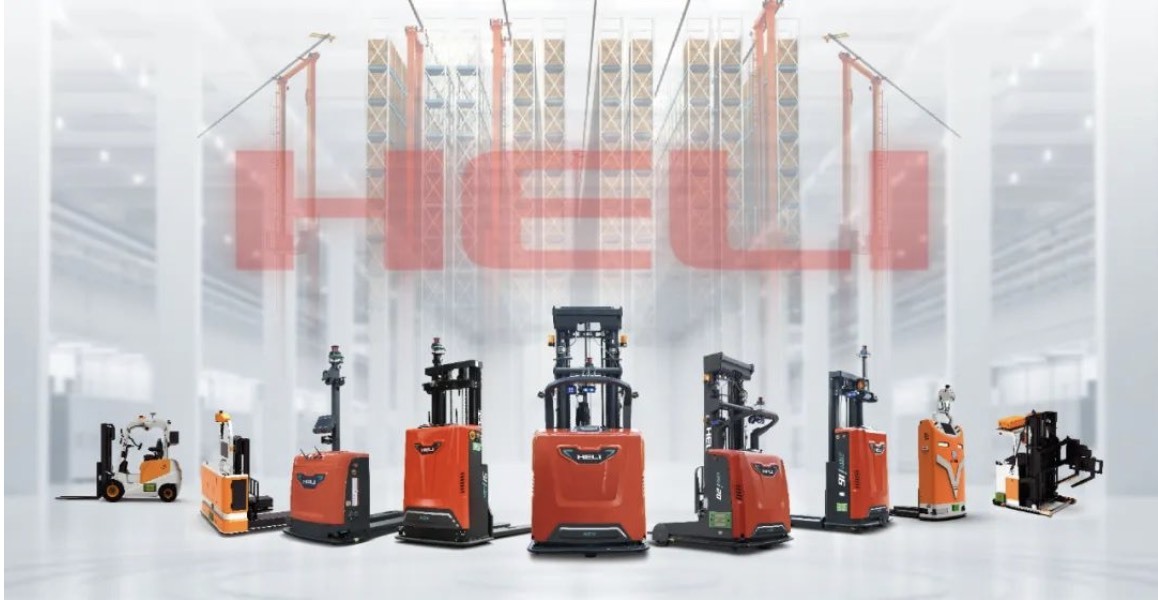
In smart factory construction, it will comprehensively improve the intelligence level of production lines, advance the deepened application of the real-time data-driven manufacturing operations management (MOM) system, and carry out the cultivation of digital and intelligent scenarios. In digital supply chain construction, it will upgrade and improve the functions of the digital supply chain platform (SRM) and the enterprise resource planning management system (ERP), so that the master production plan, capacity plan, and material requirements plan are dynamically coordinated and consistent, and collaborate and interconnect with parts suppliers. In digital marketing services, it will realize a configuration-based model for product design, manufacturing, and sales around complete vehicles and parts, meet the input and manufacturing of personalized customization needs, support convenient after-sales service, and provide a unified digital platform for 28 provincial-level marketing companies and 8 major overseas centers. In R&D of core technologies for intelligent logistics, it will conduct in-depth research on swarm intelligence technology for unmanned forklifts, further upgrade the intelligence level of products, explore application scenarios of large models in the intelligent logistics industry, and promote the construction of industry standards for product integration and implementation solutions.
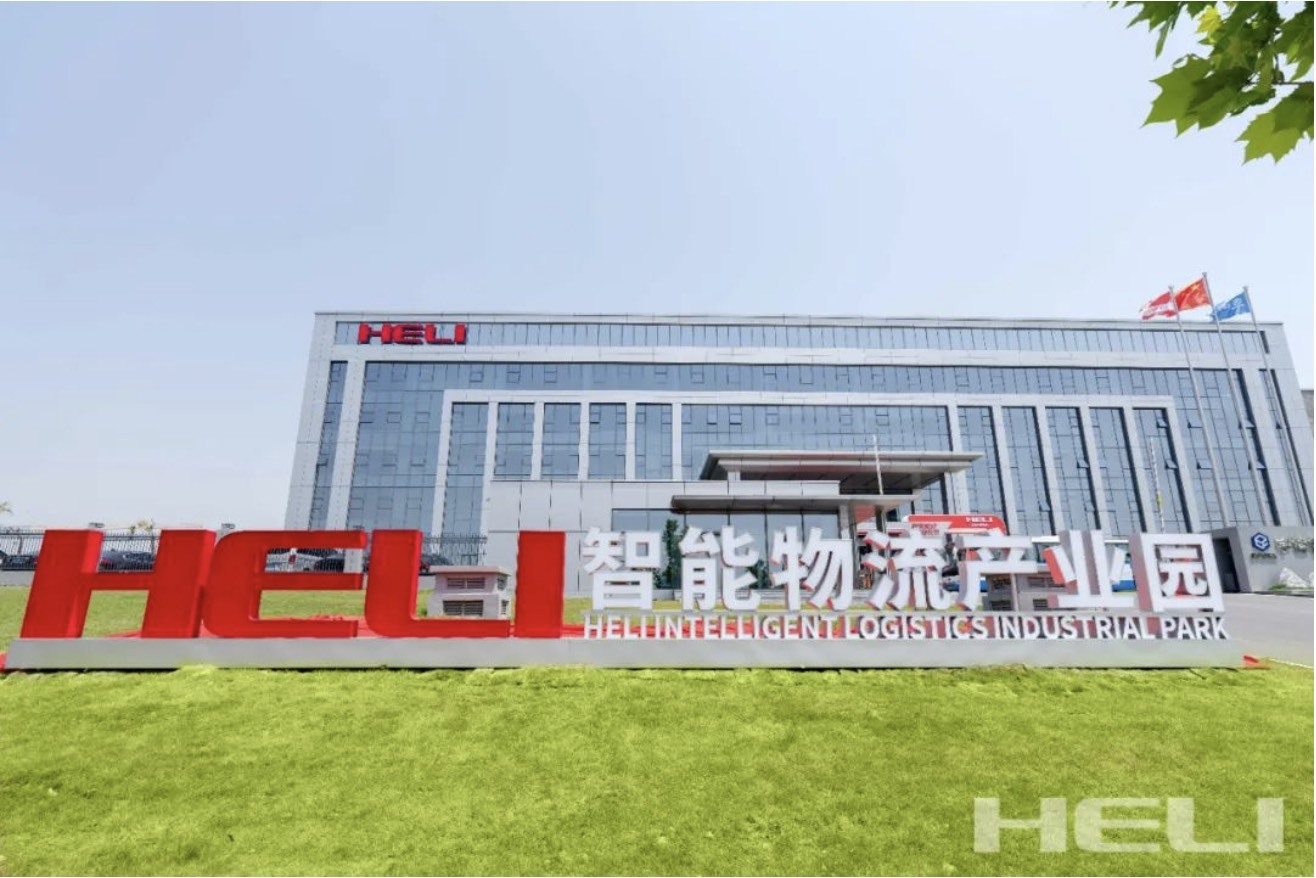
"For digital transformation to be implemented sustainably, it is far from enough to make efforts only in information systems; management mechanism reform must be promoted at the same time," Xu Yingming said. Heli will adapt to the requirements of digitalization and intelligence, carry out matching construction of business standards and specifications, reform of management systems, and upgrading of business philosophy, with institutional norms and information systems as a "two-wheel drive," so that digital transformation "transforms well and continues to transform."
World's Largest! First Concrete Successfully Poured for Main Powerhouse No. 2 of Jintan Compressed Air Energy Storage Power Station in Jiangsu
下一篇Hainan Tianjiaotan Water Conservancy Hub Project Officially Begins Power Generation

2026-09-28 1137 0
2026-09-24 10491 0

2026-09-23 10629 0
2026-09-22 10708 0

Lize City Air Terminal Underground Main Structure Nearing Completion: Maximum Transfer Walk Under 4 Minutes After Operation

Anti-seepage Curtain for Main Lock Pit of CSCEC Port Shenqiu Double-Line Lock Project Completed on Schedule

All Pile Foundations Completed on Quanzhou Baiqi Channel

Hainan Upgrades Housing and Municipal Infrastructure
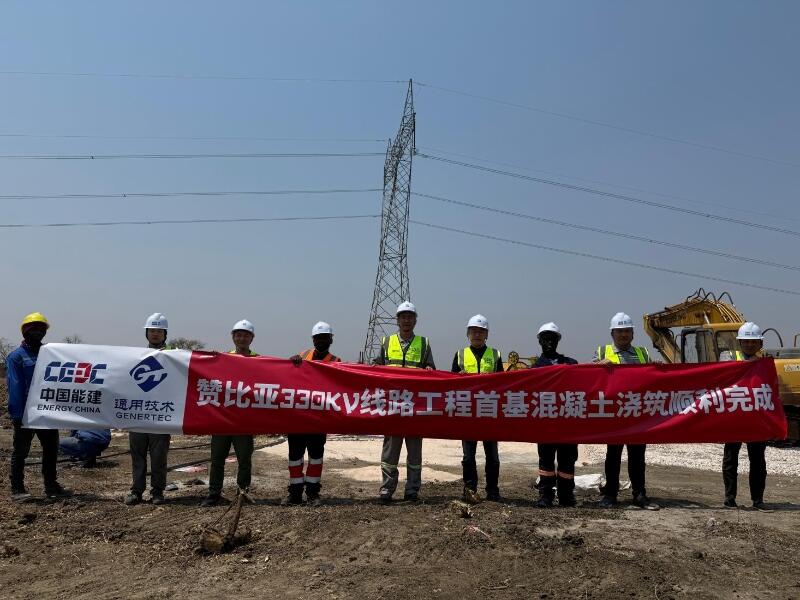
First Foundation Concrete Pour Successfully Completed for Zambia Kafue West–Muzuma 330kV Transmission Line EPC Project
Hot News

评论 (0)