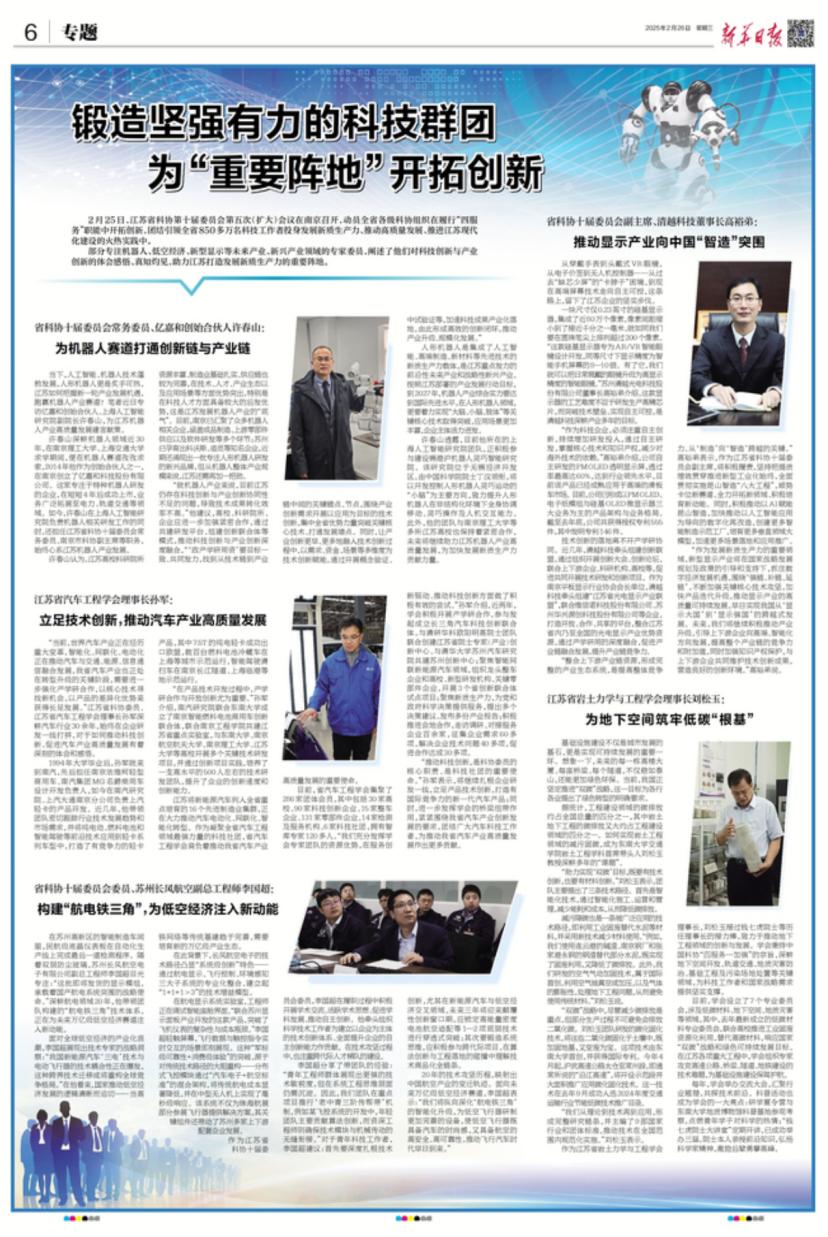
On February 25, the Fifth (Expanded) Meeting of the 10th Committee of the Jiangsu Association for Science and Technology was held in Nanjing, mobilizing science and technology association organizations at all levels across the province to pioneer and innovate in fulfilling the "four services" functions, and to unite and lead the province's more than 8.5 million science and technology workers in throwing themselves into the vigorous practice of developing new quality productive forces, promoting high-quality development, and advancing Jiangsu's modernization.
Some expert committee members focusing on future industries and emerging industries such as robotics, the low-altitude economy, and new displays elaborated on their insights, perceptions, and valuable opinions regarding scientific and technological innovation and industrial innovation, helping Jiangsu build an important base for developing new quality productive forces.
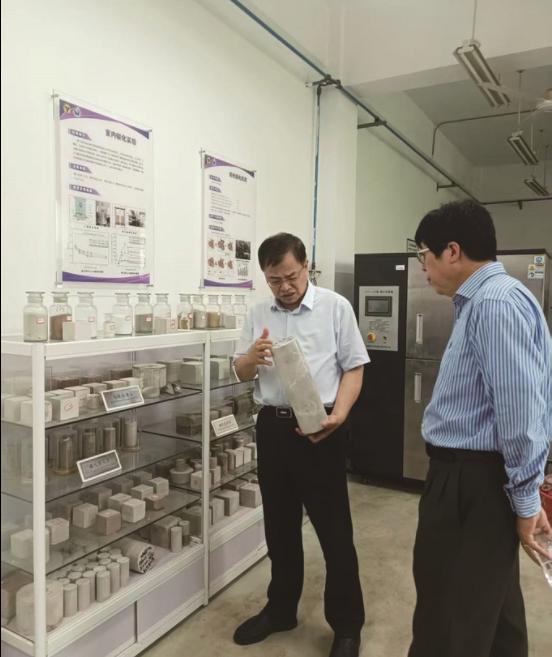
Infrastructure construction is not only the cornerstone of urban development but also an important part of achieving sustainable development. Imagine that every high-rise building, every bridge, and every tunnel in the future will not only be as steady as Mount Tai but also more green and environmentally friendly. At present, China is firmly advancing the "dual carbon" strategy, a goal that sets clear requirements for green transformation across all industries.
According to statistics, carbon emissions in the engineering construction sector account for about one quarter of the national total, of which carbon emissions from geotechnical and underground engineering in turn account for about one quarter of the engineering construction sector. How to achieve pollution reduction and carbon sequestration in the field of geotechnical engineering has become a "research topic" that Professor Liu Songyu, chief leader of the geotechnical engineering discipline at the School of Transportation of Southeast University, has devoted years to.
"To help achieve the 'dual carbon' goals, we need both technological innovation and material innovation," Liu Songyu said. The team has mainly proposed three technical pathways. The first is intelligent technology, which reduces energy consumption and costs through intelligent construction, operation, and management, thereby lowering carbon emissions.
Pollution reduction and carbon reduction is also a widely applied technical pathway, namely using industrial solid waste to replace materials such as cement and adopting new technologies to reduce material use. "For example, we use alkali residue from Lianyungang and steel slag from Nanjing Steel and Zhangjiagang Yonggang Steel to replace part of the cement, which both realizes the utilization of solid waste and reduces carbon emissions. In addition, our self-developed air pneumatic reinforcement technology, which is an international first, uses air vacuum extraction or pressurization, as well as the expansiveness of gas, to address underground engineering problems, thereby avoiding the use of traditional materials," Liu Songyu said.
In the "dual carbon" strategy, although reducing carbon emissions is the focus, some production processes inevitably emit carbon dioxide. The carbonation solidification technology developed by Liu Songyu's team solidifies this carbon dioxide in the soil, both strengthening the foundation and turning waste into treasure. This technology was pioneered by Southeast University and has obtained an international patent. Starting in April this year, a demonstration section will be set up on the Taicang-to-Changzhou section of the Shanghai-Wuhan Expressway, commonly known as the "Yanjiang Expressway," and the carbonation solidification technology will be promoted and applied on a large scale. In September last year, this technology was successfully selected into the 2024 Promotion Catalog of Energy-Saving and Low-Carbon Technologies for the Transportation Industry.
"From theory to technology to application, we have formed a complete research chain, and we have served as chief editor of nine national, industry, and group standards to promote the standardized implementation of the technology nationwide," Liu Songyu said.
As chairman of the Jiangsu Society for Rock Mechanics and Engineering, Liu Songyu has taken over the baton from successive chairmen such as Academician Qian Qihu, and is committed to promoting innovation and development in the field of underground engineering. The society upholds the purpose of the China Association for Science and Technology of "four services and one strengthening," and works deeply in key fields such as underground space development, rail transit, geological disaster prevention and control, foundation engineering, and contaminated site remediation, providing solid support for science and technology workers and the country's strategic needs.
At present, the society has established seven professional committees, covering fields such as low-carbon materials, underground space, and geological disasters. Among them, the Low-Carbon Materials Professional Committee, newly established last year, works with universities to advance the resource utilization of industrial solid waste to replace high-carbon materials, responding to the national "dual carbon" strategy and the goal of green and sustainable development. In major projects across Jiangsu, the society organizes experts to tackle technical challenges in the construction of expressways, bridges, tunnels, and subways, safeguarding infrastructure construction.
Every year, the society holds an exchange conference, gathering industry leaders to explore the technological frontier together. Science popularization activities have also become a highlight of the society: research summer camps and visits to the science popularization base at the Geological Museum of Southeast University ignite young students' passion for science; the "Academician Qian Qihu Lecture Series" is held regularly and has been successfully held three times, with the academician himself personally teaching frontier knowledge, carrying forward the spirit of scientists, and inspiring younger generations to scale new heights.
Prefabrication Technology for Steel-Concrete Joint Sections in Bridge Superstructures
下一篇International Ship Construction Project Undertaken by Northwest Institute Successfully Leaves Factory
2026-09-28 1157 0
2026-09-24 10586 0
2026-09-23 10714 0
2026-09-22 10808 0

Lize City Air Terminal Underground Main Structure Nearing Completion: Maximum Transfer Walk Under 4 Minutes After Operation

Anti-seepage Curtain for Main Lock Pit of CSCEC Port Shenqiu Double-Line Lock Project Completed on Schedule

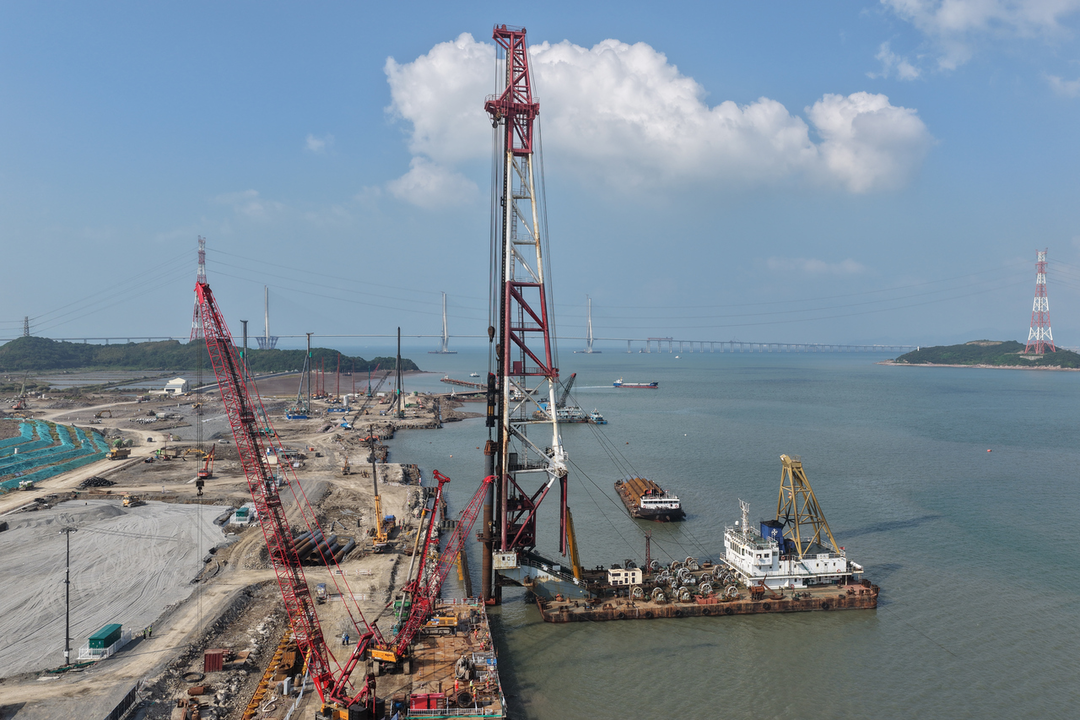
All Pile Foundations Completed on Quanzhou Baiqi Channel

Hainan Upgrades Housing and Municipal Infrastructure

First Foundation Concrete Pour Successfully Completed for Zambia Kafue West–Muzuma 330kV Transmission Line EPC Project
Hot News

评论 (0)