From DeepSeek's explosive rise to the stunning debut of humanoid robots on the Spring Festival Gala stage, a wave of technology is unfolding. At the same time, the construction machinery industry is also undergoing a technological transformation driven by cross-industry collaboration.
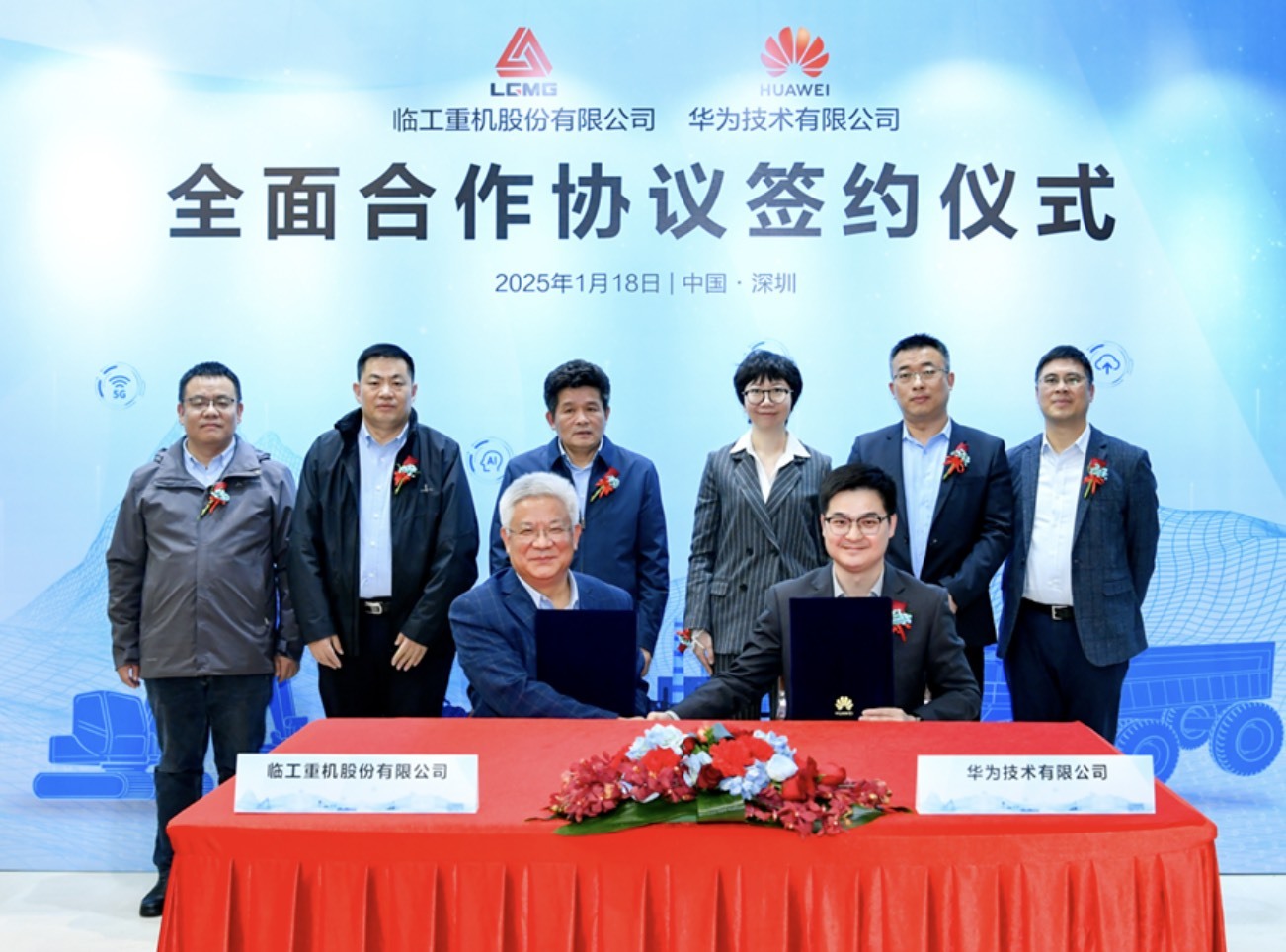
On January 18, LGMG and Huawei held a strategic cooperation signing ceremony. The two parties will leverage Huawei's technology and rich experience in the field of autonomous driving, including vehicle-side perception, intelligent scheduling, and 5G networks, combined with LGMG's R&D and manufacturing capabilities in mining trucks and other equipment, to jointly develop mature and stable autonomous mining trucks. In the future, the two parties will also jointly build a "lighthouse project" in the field of autonomous driving.
This cooperation between LGMG and Huawei is just a microcosm of the intelligent transformation of the construction machinery industry in recent years. Looking around, more and more construction machinery enterprises are joining hands with well-known companies in the internet, communications, new energy and other industries to inject new souls into traditional equipment with digital code.
01 | Cross-industry Collaboration in Construction Machinery
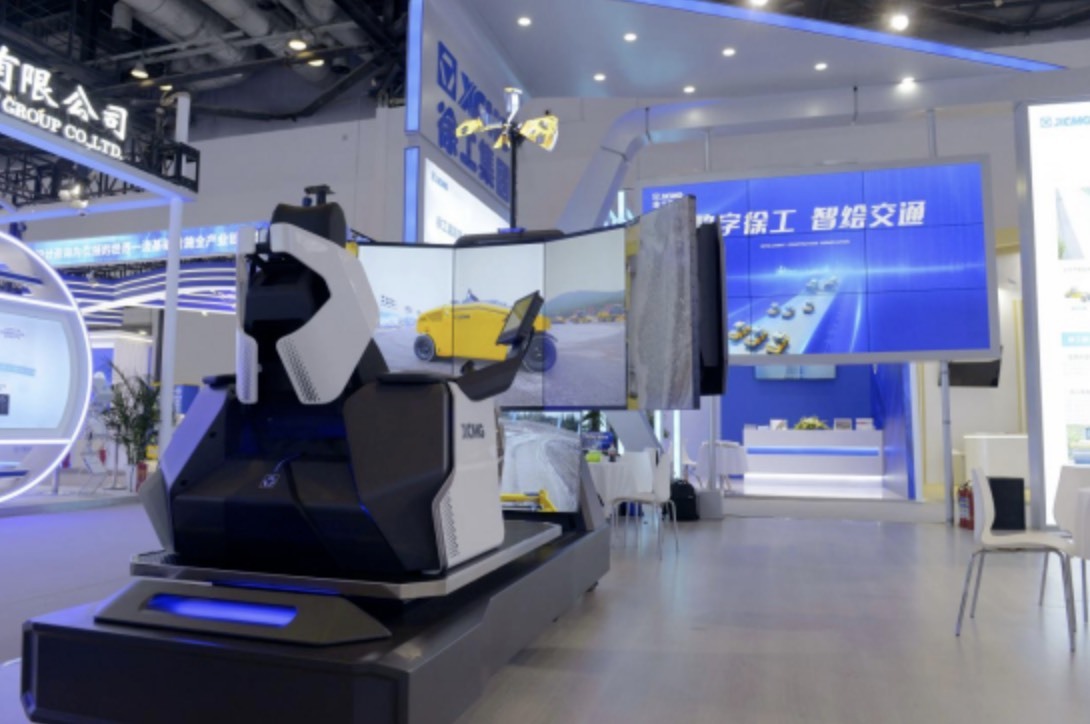
In recent years, trends such as remote control, autonomous driving, and new energy in construction machinery have become the industry's "hot favorites," with more and more new and established players entering the field, including well-known technology companies such as Huawei, NetEase, China Mobile, and Tage Idriver. Below are some of the more influential cross-industry collaboration cases in the construction machinery industry:
Zoomlion + China Mobile: On December 31, 2019, the Hunan Laboratory of the Zoomlion and China Mobile 5G Joint Innovation Center was officially inaugurated. The two parties will form a team to promote the deep integration of construction machinery and 5G communication technology. As a new generation of information and communication technology, 5G is the infrastructure for achieving the Internet of Everything and an important driving force for enterprise digital transformation. Through 5G applications, autonomous equipment operation and remote monitoring will be realized, making operations more precise and minimizing communication latency between humans and equipment, bringing disruptive changes to the construction machinery industry.
XCMG + NetEase: In 2023, XCMG and NetEase joined forces. Based on XCMG's intelligent control platform, they applied artificial intelligence technology to construction machinery, successfully transferring NetEase's accumulated digital and AI capabilities in gaming to products such as excavators and loaders. These "big blocks" now have "big wisdom," possessing capabilities for remote control, cloud computing, and intelligence, thereby achieving the goal of unmanned operations.
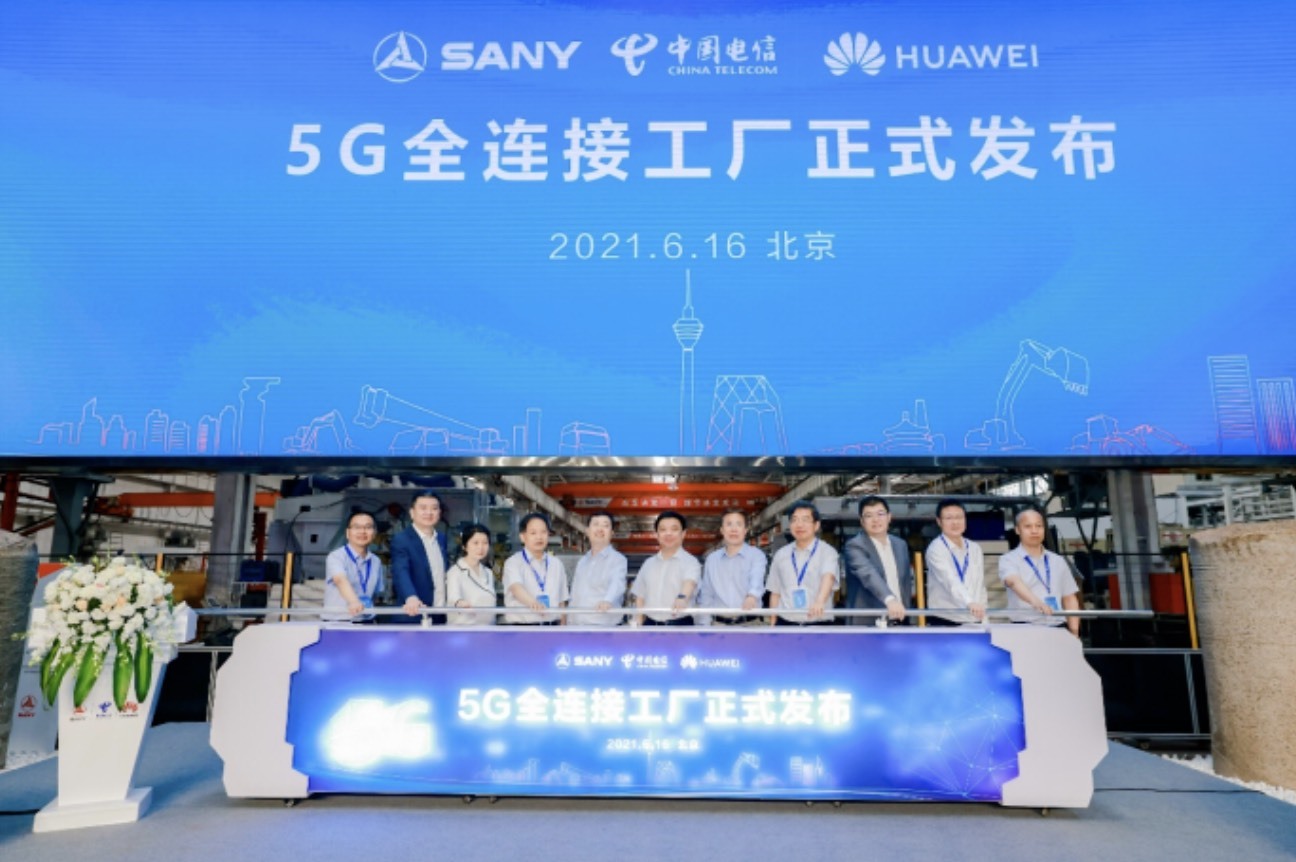
Sany Heavy Industry + China Telecom, Huawei: In June 2021, Sany Heavy Industry, together with China Telecom and Huawei, successfully held the Equipment Manufacturing 5G Fully-Connected Factory Launch Event at Sany Heavy Industry's Nankou Industrial Park in Changping District, Beijing. They will continue to promote application verification and large-scale rollout in the field of 5G intelligent manufacturing, accelerating the construction of 5G factories in multiple locations across the country including Beijing Changping, Shanghai Lingang, and Jiangsu Kunshan, achieving standardization of operational business, digitization of products, and intelligent data management.
LiuGong + Tencent: In 2021, LiuGong and Tencent signed a strategic cooperation agreement. The two parties will leverage their technical advantages in cloud computing, big data, and artificial intelligence to build a new-generation LiuGong multimedia service platform. This platform will also provide 7×24-hour call service support for after-sales service across LiuGong's full product line and full lifecycle, promoting LiuGong's digital transformation and upgrading and achieving digital upgrading of intelligent customer operations.
In addition, there are also collaborations between Tongli Heavy Industry and Eacon, and between LGMG and CiDi, Tage Idriver, etc. in the field of autonomous mining trucks, jointly exploring new boundaries of intelligence and unmanned operations in the mining machinery field.
At the same time, battery and supporting enterprises such as CATL and FinDreams Battery have also participated, further promoting cross-industry cooperation between new energy enterprises and construction machinery manufacturers. For example, Sany Group and TZ Group have partnered with CATL to carry out close cooperation in the field of new energy construction machinery, promoting the electrification development of the construction machinery industry, and so on.
Cross-industry collaboration in the construction machinery industry is continuously deepening, with technology companies, telecom operators, battery manufacturers and others joining in, providing strong impetus for the intelligent and green development of the industry.
02 | Cross-industry Collaboration Reshapes the New Landscape of the Construction Machinery Industry
In the automotive industry, Huawei has partnered with automakers such as Chery, Seres, and BAIC to launch intelligent new energy vehicles, effectively driving the development of the automotive industry. For example, Seres' earnings forecast shows that in 2024 it achieved revenue of 144.2 billion to 146.7 billion yuan, a year-on-year increase of 302.32% to 309.30%, turning losses into profits. Seres' performance is closely related to Huawei's empowerment, with cumulative sales of AITO vehicles reaching 386,300 units, contributing nearly 80% to the group's overall performance.
This also provides a successful example for cross-industry collaboration in the construction machinery industry. In recent years, the cross-industry trend in the construction machinery industry has intensified. What factors are driving this behind the scenes?
First, policy drivers. The in-depth implementation of the "dual carbon" strategy has driven the continuous upgrading of industry emission standards. In 2020, the Ministry of Industry and Information Technology issued the "Action Plan for Promoting Vehicle Electrification in the Public Sector" to advance the electrification of construction machinery and accelerate the industry's transition to new energy. Cities such as Beijing and Shanghai have introduced subsidy policies for construction machinery renewal to encourage enterprises to accelerate green transformation.
Second, structural changes in market demand are spawning innovation consortia. Market demand for more efficient, environmentally friendly, and intelligent construction machinery products is growing, and cross-industry collaboration can help enterprises better meet market demand. Taking mining machinery as an example, open-pit mines face great pressure to reduce costs in labor, energy consumption, and safety, and the demand for new technologies and new solutions continues to grow. Autonomous mining trucks keep workers away from the front lines of operation, greatly improving industry safety, while enabling all-weather continuous operation, significantly enhancing production efficiency and productivity. To meet composite demands, some construction machinery enterprises choose cross-industry cooperation to jointly build industrial internet platforms, further improving unmanned and remote control efficiency.
In addition, technological breakthroughs provide a realistic foundation for cross-industry collaboration. Breakthroughs in battery energy density, 5G network latency, AI visual algorithm accuracy, and other areas provide technical support for accelerating the realization of intelligence and green development in construction machinery.
When traditional manufacturing genes deeply integrate with digital technology, the construction machinery industry is evolving from "steel giants" into "intelligent living entities," opening up a new channel for high-quality development amid industrial transformation.
03 | The Impact and Challenges of Cross-industry Collaboration
While reshaping the industrial landscape, cross-industry collaboration in the construction machinery industry is also triggering profound changes at multiple levels including technological innovation, production models, and market competition.
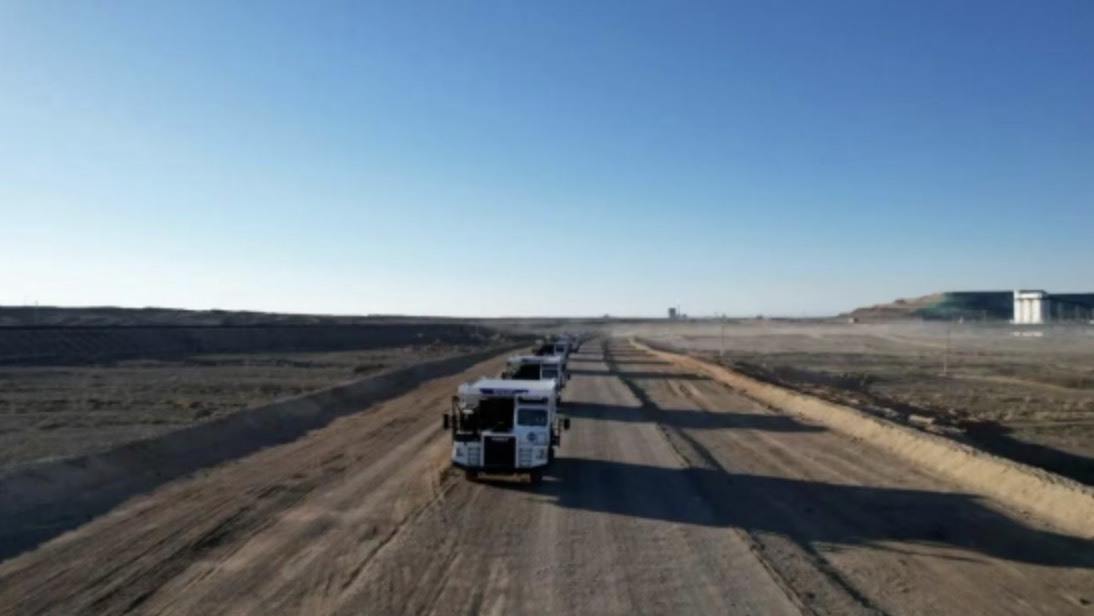
In terms of technology, cross-industry collaboration has significantly accelerated the penetration of intelligent technologies. For example, in 2024, Tongli Heavy Industry deepened cooperation with Eacon, and the latest two new energy autonomous mining truck models—the ET100 and ET70M—totaling more than 300 units were put into operation in mining areas in Xinjiang and Inner Mongolia, driving rapid growth in the company's autonomous vehicle sales.
In terms of production models, the production and operation system is undergoing digital reconstruction. The "Xiangyun Platform" jointly built by Sunward and China Unicom, through the application of intelligent production lines, has increased annual production capacity by 6 times compared to before; the production cycle of an excavator has been shortened by 50%; and the number of personnel can be reduced by 50%.
In addition, cross-industry collaboration is changing the competitive landscape of the construction machinery industry and promoting industrial upgrading. As stated by Yu Mengsheng, Chairman of LGMG, LGMG will rely on its own R&D and manufacturing capabilities in mining trucks and aerial work equipment, combined with Huawei's 5G and artificial intelligence technologies, to jointly promote the industry's intelligent and unmanned development.
However, this cross-industry collaboration is not all smooth sailing, and there are still some challenges to be resolved.
First, technology integration challenges: integrating technologies from different fields is difficult, and issues such as technology compatibility need to be resolved. For example, in the field of mining construction machinery, although there have been many autonomous driving cases for mining trucks both domestically and internationally, other equipment such as excavators and loaders, due to higher operational difficulty and complex and variable working environments, lack sufficient accumulation of precise data required for autonomous driving, and full automation of mines still faces many challenges.
Second, cost pressure: the application of technologies such as electrification and intelligence may increase costs and affect product market competitiveness. As is well known, one of the main reasons affecting the further increase in penetration rate of electric construction machinery is the purchase cost, and this challenge will also hinder the further development of cross-industry collaboration in construction machinery.
In summary, cross-industry collaboration in the construction machinery industry not only promotes technological innovation and industrial upgrading but also brings new development opportunities and challenges to the industry. With the continuous deepening of cooperation and the widespread application of new technologies, we have reason to believe that the construction machinery industry will achieve more intelligent and green development, creating greater value for users worldwide.
First Project of the New Year | Accelerating Urban Infrastructure Construction: Major Projects in Jiading Strike Up the "Song of Progress" for Post-Holiday Resumption
下一篇Construction Begins on Yangtze River Delta Automotive Innovation Base, Capable of Rapidly Transforming into a Full-Domain Intelligent Connected Vehicle Test Site
2026-09-28 1157 0
2026-09-24 10586 0
2026-09-23 10714 0
2026-09-22 10808 0

Lize City Air Terminal Underground Main Structure Nearing Completion: Maximum Transfer Walk Under 4 Minutes After Operation

Anti-seepage Curtain for Main Lock Pit of CSCEC Port Shenqiu Double-Line Lock Project Completed on Schedule

All Pile Foundations Completed on Quanzhou Baiqi Channel

Hainan Upgrades Housing and Municipal Infrastructure
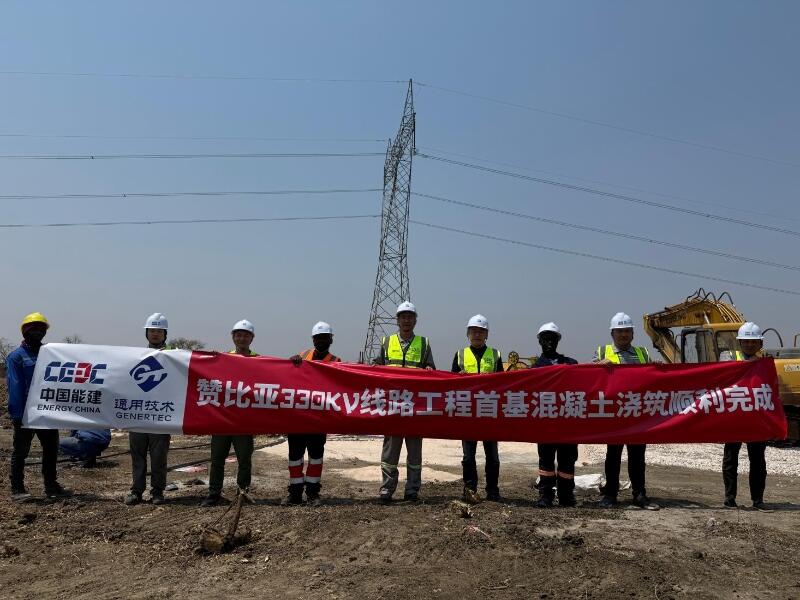
First Foundation Concrete Pour Successfully Completed for Zambia Kafue West–Muzuma 330kV Transmission Line EPC Project
Hot News

评论 (0)