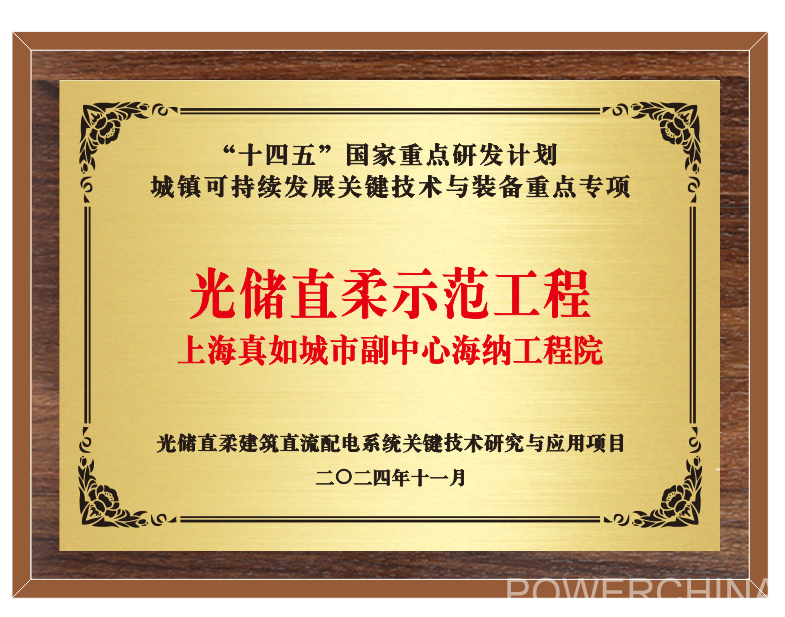
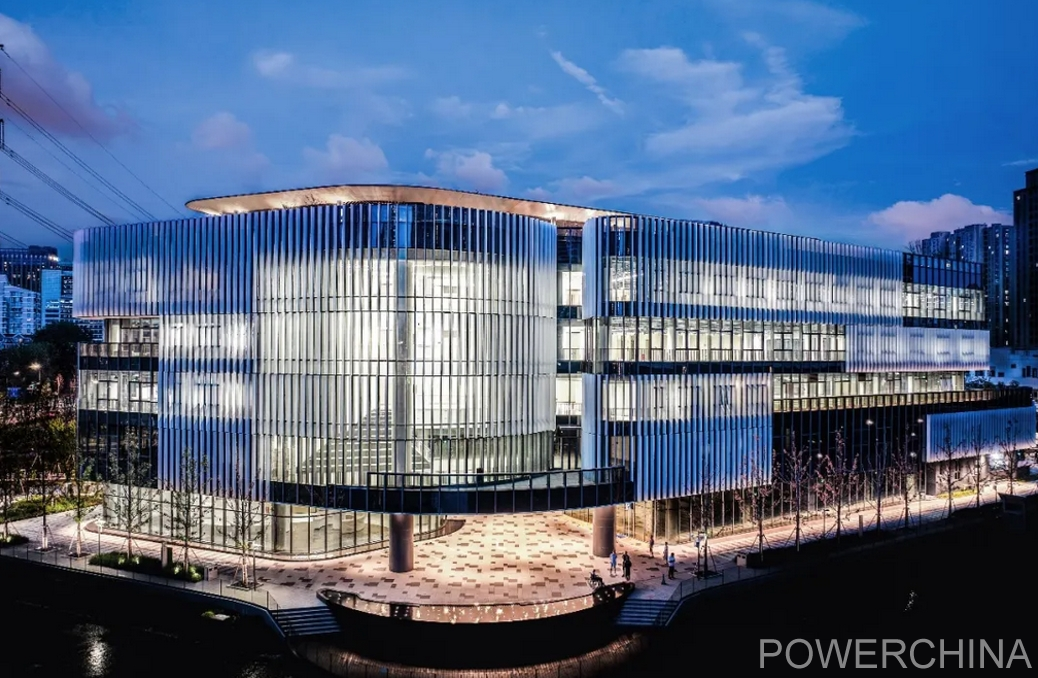
On November 19, the 2024 annual progress review and expert consultation meeting for the "14th Five-Year Plan" National Key R&D Program "Key Technologies and Equipment for Sustainable Urban Development" special project—the open-call ("reveal the list and take command") project "Research and Application of Key Technologies for DC Power Distribution Systems in Photovoltaic-Energy-Storage-Direct-Flexible (PEDF) Buildings"—was held at the Building Energy Conservation Research Center of Tsinghua University in Beijing. The meeting was organized by the Shenzhen Institute of Building Research / the PEDF Special Committee of the China Association of Building Energy Efficiency, and was led by Academician Jiang Yi of the Chinese Academy of Engineering as head of the expert panel. Participants came from municipal government agencies, power grids, universities, design institutes, real estate development, and other sectors. The "Shanghai Zhenru Sub-Center Haina Engineering Institute Project," for which Shanghai Electric Power Design Institute Co., Ltd. provided consulting and design services, stood out from 34 candidate projects nationwide and became one of the first batch of "14th Five-Year Plan" National Key R&D Program PEDF demonstration projects.
PEDF buildings are an important direction for achieving low-carbon development goals in urban and rural construction, and the low-voltage DC power distribution system is the core technology supporting the large-scale application of PEDF buildings. As a pioneering project of the "Haina Town in the Zhenru Area, Shanghai's Second Batch of Low-Carbon Development Practice Zones," the Haina Engineering Institute, on the basis of adopting full electrification to eliminate direct carbon emissions, fully combines passive and active energy-saving technologies, optimizes building design and operation management, and improves the building's own energy-saving and carbon-reduction capacity. In addition, it makes full use of photovoltaic power generation, energy storage, DC microgrids, and flexible load regulation to improve energy efficiency and grid interaction capability, and comprehensively applies measures such as zero-carbon electricity and carbon-reduction products, ultimately achieving the building's carbon neutrality goal.
At present, the project has been incorporated into the green ecology specialized plan of the Zhenru Sub-Center green ecological urban area, and has passed the three-star green building pre-assessment, the PEDF special review, and the carbon-neutral building gold-level certification. Previously, at the 28th Conference of the Parties (COP28) to the United Nations Framework Convention on Climate Change held in Dubai, UAE, the project was also listed by UN-Habitat as an "outstanding practice case of Chinese cities and enterprises in the direction of low-carbon development."
Green and low-carbon, demonstration first. Shanghai Electric Power Design Institute will continue to practice the concept of green and sustainable development, adhere to the dual-domain development strategy of "city + energy," promote the coordinated interaction and development of buildings and power systems, create more high-quality demonstration projects, and help lead and accelerate the implementation of the "dual carbon" goals in urban and rural construction.
A "National Treasure" Takes Shape: First Hypergravity Centrifuge Main Unit Installed at Zhejiang University Hypergravity Project
下一篇PowerChina's Huancayo Freedom Hospital Project in Peru Successfully Completed and Handed Over

2026-09-28 1137 0
2026-09-24 10491 0

2026-09-23 10629 0
2026-09-22 10708 0

Lize City Air Terminal Underground Main Structure Nearing Completion: Maximum Transfer Walk Under 4 Minutes After Operation

Anti-seepage Curtain for Main Lock Pit of CSCEC Port Shenqiu Double-Line Lock Project Completed on Schedule

All Pile Foundations Completed on Quanzhou Baiqi Channel

Hainan Upgrades Housing and Municipal Infrastructure
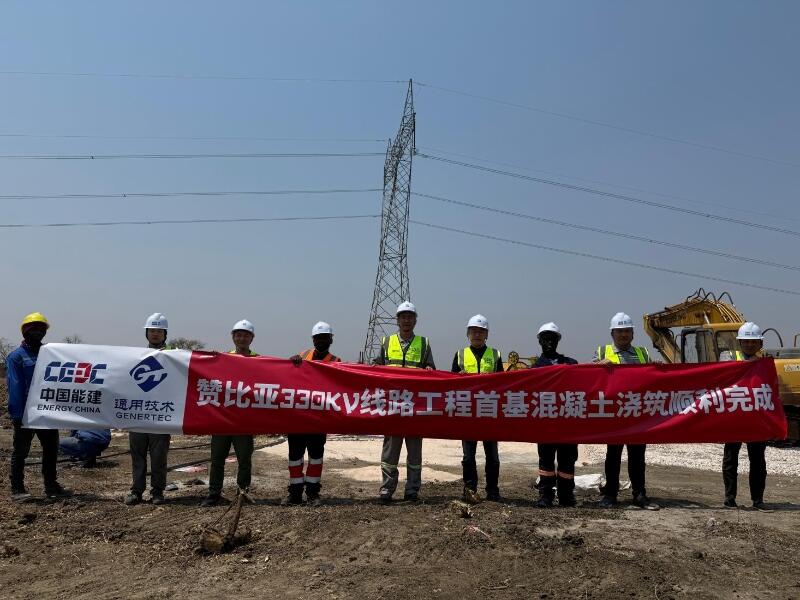
First Foundation Concrete Pour Successfully Completed for Zambia Kafue West–Muzuma 330kV Transmission Line EPC Project
Hot News

评论 (0)