On the afternoon of October 25, the university held a meeting to advance research on the "1→0" fundamental problems of major engineering. Li Yanrong, Secretary of the University Party Committee, attended the meeting and delivered a speech. Cui Wanzhao, a researcher at the Xi'an Branch of the China Academy of Space Technology; representatives of chief designers from AVIC First Aircraft Institute; heads of the university's science and engineering schools, research institutes, and relevant functional departments; and representatives of the first batch of "1→0" project teams attended the meeting. Vice President Zhang Kaifu chaired the meeting.
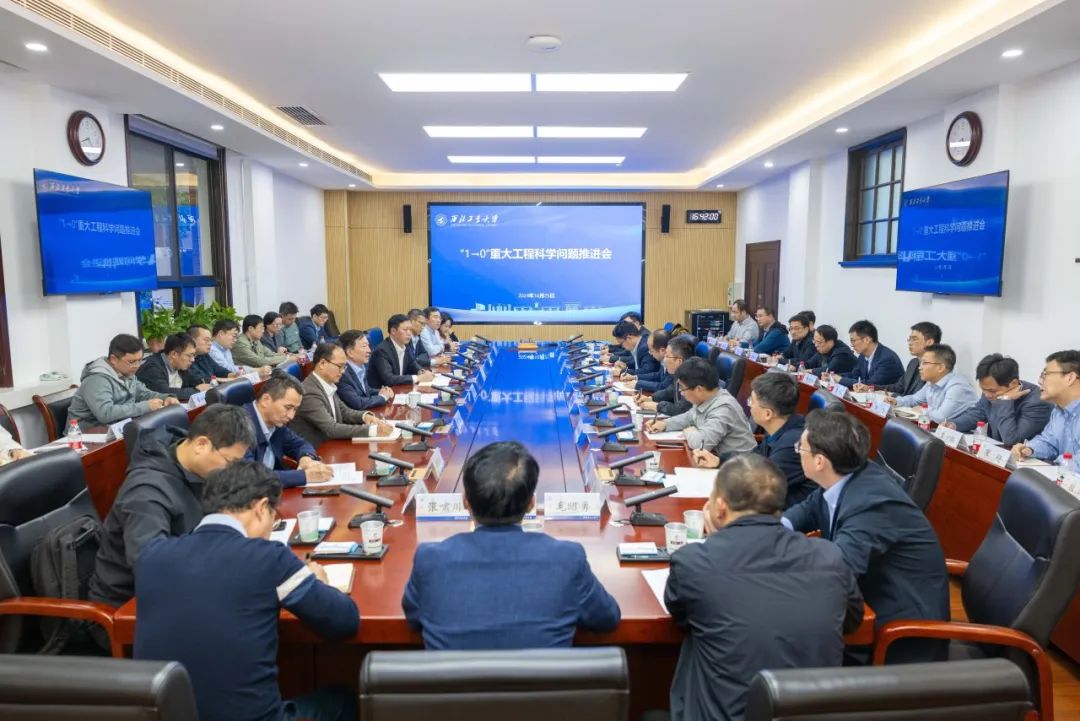
Zhu Jihong, a professor at the School of Mechanical Engineering, and An Bo, an associate professor at the School of Aeronautics, representatives of the first batch of "1→0" major engineering fundamental problems research project teams, respectively reported on the latest progress of their teams' "1→0" research.
Yu Hui, Secretary of the Party Committee of the School of Aeronautics, and Han Junwei, Dean of the School of Automation, successively introduced their schools' exploration of "1→0" and their next steps.
Cui Wanzhao, a researcher at the Xi'an Branch of the China Academy of Space Technology, and the representative of chief designers from AVIC First Aircraft Institute respectively discussed their thoughts and reflections on "1→0" in light of the technical problems they encountered in their actual work.
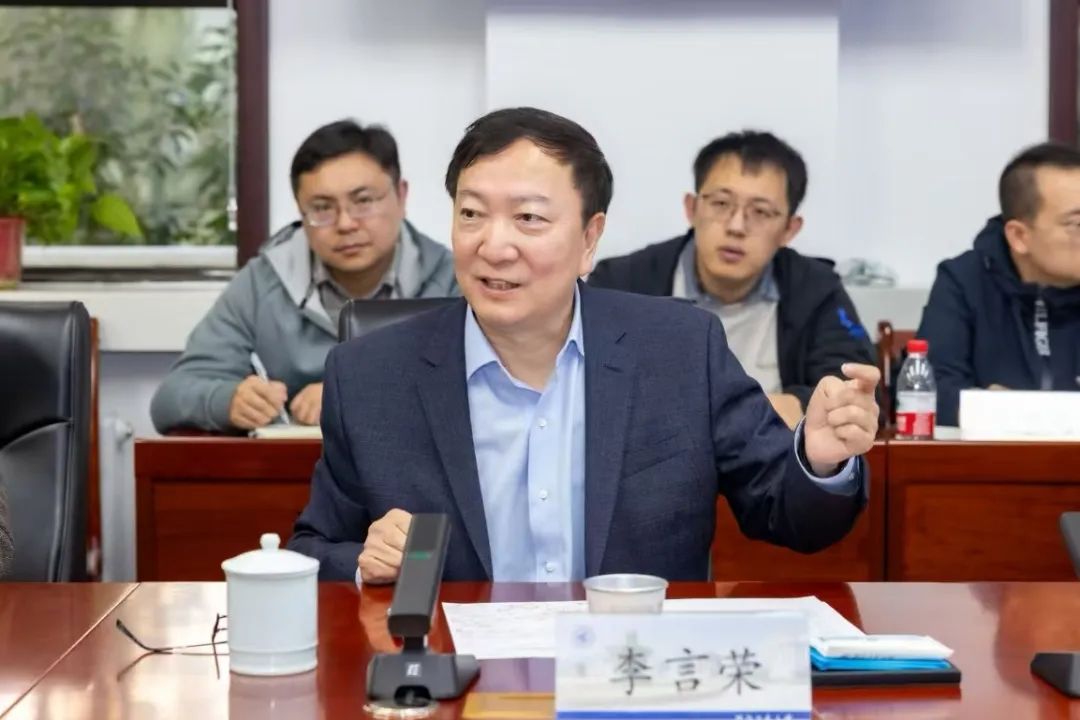
In his concluding speech, Li Yanrong pointed out that, at present, retrospective research on "1→0" has aroused widespread attention and discussion in the fields of engineering technology and scientific research in China. As the university that first proposed this concept, NPU woke up early and got started early, and must do it well. He said that next, in order to better promote this work, several points require special attention: First, organized collaborative research must be further strengthened during implementation. "1→0" is the most important manifestation of organized research and the most important lever for our university. In organizing everyone to carry out "1→0" research, we should align top and bottom as much as possible and exert efforts in both directions, working in an organized way to refine problems, organize projects, and produce results. Generally speaking, one should open the door to find "1" and close the door to find "0." Second, the stance must be high and the entry point small. The starting point of "1→0" research must be high and the planning grand; one must stand high and plan far. Only by standing high can one see far, see clearly, and see through; only by standing high can one have deep penetrating power, grasp big problems, form big projects, produce results with big impact, and align with major national needs. On the other hand, when carrying out specific research, the entry point must be small, practical, and detailed; small entry points should be used to solve big problems and essential problems. Ideas should be bold, and verification should be careful. Third, attention must be paid to combining long-term goals with short-term effectiveness. Finding the "0" in "1→0" is the key to success, but truly returning from the underlying logic of "0" to accurate mathematical and physical expression is an arduous process. In this process, special attention must be paid to producing phased results; otherwise, many people will find it difficult to persevere until the day final victory is achieved. Fourth, "1→0" projects must be selected to be few but excellent. The enthusiasm of all units to dig out "1→0" problems and form projects based on the development of systems, complete machines, models, and products inside and outside the university has already been aroused, but there must not be projects blooming everywhere, still less digging three feet deep. Most people may not necessarily have the conditions and aptitude to do this kind of anti-traditional reverse-thinking research. All engineering and science schools and teams must firmly set the goal of being few but excellent. At the beginning, the most important thing is to establish standards and set up models, forming demonstrations and guidance, and by all means avoid spreading things too thin from the start.
Finally, he said that in the process of advancing "1→0," many new situations and new problems will certainly be encountered. As long as we work together and all departments of the university actively cooperate and support, NPU can fully blaze a new path in scientific and technological innovation.
63% Civil Engineering Progress! New Developments in Guangzhou Metro Line 14 Phase II Construction
下一篇Embracing the "New": Digital Geological Survey System Ushers Engineering Geological Investigation into the "Digital-Intelligent" Era

2026-09-28 1137 0
2026-09-24 10491 0

2026-09-23 10629 0
2026-09-22 10708 0

Lize City Air Terminal Underground Main Structure Nearing Completion: Maximum Transfer Walk Under 4 Minutes After Operation

Anti-seepage Curtain for Main Lock Pit of CSCEC Port Shenqiu Double-Line Lock Project Completed on Schedule

All Pile Foundations Completed on Quanzhou Baiqi Channel

Hainan Upgrades Housing and Municipal Infrastructure
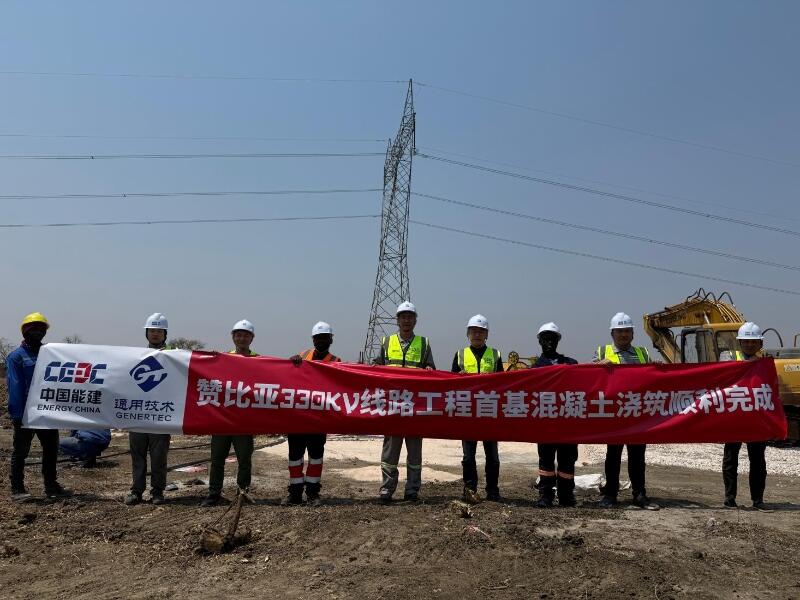
First Foundation Concrete Pour Successfully Completed for Zambia Kafue West–Muzuma 330kV Transmission Line EPC Project
Hot News

评论 (0)