In the first half of 2013, China's land transfer revenue grew rapidly, but the area of land transferred was in negative growth, from which it can be foreseen that the demand pull from future newly started real estate floor area on construction machinery will be limited; on the other hand, fiscal policy will still find it difficult to make a difference in the second half of the year; in the second half of the year, fiscal subsidy funds will be in short supply, control of local government debt risks will continue to ferment, and the infrastructure investment situation will not be optimistic. The construction machinery industry research team of the Forward Industry Research Institute believes that in the second half of 2013, due to the large social inventory of construction machinery, demand for new machines will remain sluggish.
Amid the difficulties of the entire construction machinery industry, "expanding overseas" and "developing toward western China" are usually topics discussed by industry insiders. Monitoring data from the Forward Industry Research Institute show that in the first half of 2013, exports of complete construction machinery units rose 1.76% year on year, while exports of parts and components fell 61.36% year on year; high-speed growth in exports of tyre-mounted self-propelled cranes, dredgers, all-terrain cranes of more than 100 tons and crawler excavators ensured the growth of complete-unit exports. This shows that China's high-tech special equipment in the construction machinery industry is gradually being accepted abroad, and that technological upgrading within the industry has become a consensus, laying a good foundation for China's construction machinery to participate in international competition. The "expanding overseas" strategy, as a long-term development strategy for China's construction machinery industry, is relatively wise, but its help in getting the industry out of difficulties in the short term is limited, because the situation in which Chinese construction machinery enterprises' exports "emphasize complete machines and neglect parts" will be difficult to change in the short term. As for the "developing toward western China" strategy, the construction machinery industry research team of the Forward Industry Research Institute believes that this strategy is also of limited help in getting China's construction machinery out of difficulties. The following chart is a matrix chart of the fixed asset investment share and average growth rate of 31 regions in mainland China from 2010 to 2012. It can be seen that the most attractive markets are still in East China regions such as Jiangsu, Shandong and Zhejiang. The average growth rates in Sichuan, Chengdu and Yunnan are relatively low; the investment scale in Qinghai, Ningxia, Gansu and Xinjiang is relatively small, making them markets to enter at an opportune time, with limited help in the short term.
The 'Greater Huaxi' Dilemma: Land Conflicts Become a Roadblock
下一篇China's Top 500 Private Enterprises: More Construction Companies, Fewer Steel Companies
2026-09-28 1157 0
2026-09-24 10586 0
2026-09-23 10714 0
2026-09-22 10808 0

Lize City Air Terminal Underground Main Structure Nearing Completion: Maximum Transfer Walk Under 4 Minutes After Operation

Anti-seepage Curtain for Main Lock Pit of CSCEC Port Shenqiu Double-Line Lock Project Completed on Schedule

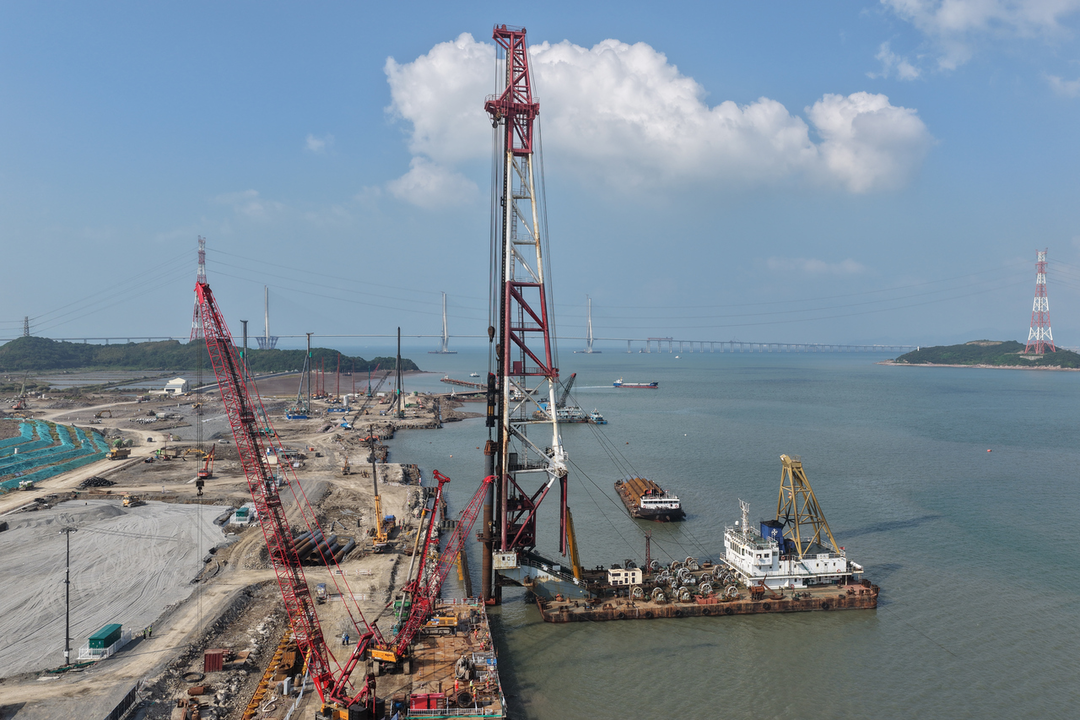
All Pile Foundations Completed on Quanzhou Baiqi Channel

Hainan Upgrades Housing and Municipal Infrastructure

First Foundation Concrete Pour Successfully Completed for Zambia Kafue West–Muzuma 330kV Transmission Line EPC Project
Hot News

评论 (0)