|
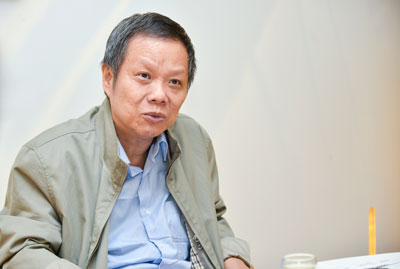
Wang Mingxian, Deputy Director of the Institute of Architectural Art, Chinese National Academy of Arts Wang Mingxian believes that contemporary Chinese architecture lacks many characteristics of traditional Chinese architecture, such as Chinese garden culture and the relationship between architecture and nature. Western architecture designed by foreign architects is not suitable for Chinese cities and is not harmonious with the Chinese urban environment. Q: Currently, in first-tier cities like Beijing, Shanghai, and Guangzhou, works by foreign architects are numerous, and some important buildings also tend to choose world-class design firms. This preference has even spread from first-tier cities to second- and third-tier cities. How do you view this phenomenon? Wang: The phenomenon of foreign architects entering the Chinese market is not a bad thing. Recently, there has been a saying that foreign architects have made cities like Beijing their testing grounds. There must be reasons for foreign architects to enter China; they are all top international architectural design teams and have mature works on the international stage. The Chinese government or developers are precisely interested in their designs. Foreign architects entering China can be divided into two types: one is commercial firms, and the other is academic research firms, which focus more on studying architectural culture. The difference between the two is significant. I personally hope that architects with a research background will enter the Chinese market because they will play a certain role in promoting the development of contemporary Chinese architecture. However, at the same time, I regret to feel that although some foreign architects have reached international standards, they do not know enough about land like China's, so I think many of their works are like "objects from outer space" and are not closely related to China. Their architectural concepts have not been integrated with local Chinese culture. Q: In recent years, there have been some emerging Chinese designers in the international market who have created works combining architecture with Chinese culture, such as Wang Shu, who won the Pritzker Prize. At what stage do you think the development level of contemporary Chinese architects is? Wang: Overall, I think the level of contemporary Chinese architects is not yet sufficient. Over the past hundred years, Japanese architects have made certain contributions to the development of world architecture. In 1960, young Japanese architects proposed the "Metabolism" movement, putting forward their views on new urbanism architectural experiments and having their own practices. Therefore, in recent years, modern Japanese architecture has played a certain role in promoting the development of world architecture. Encouragingly, a group of young Chinese architects has begun to use the concepts of Chinese gardens in their creations. Including Wang Shu, Dong Yigan, Ge Ming, and Tong Ming, they have all started to focus on the study and exploration of Chinese gardens. Even younger Ma Yansong's attention to "Shanshui City" culture is a good practice of excavating traditional Chinese culture, and he may represent the direction of future urban development in China. Q: Recently, when interviewing another jury member, Teacher Wang Xiaoshan, he said that the Forbidden City in Beijing is his least favorite palace, believing that every room in the Forbidden City is basically the same except for orientation and height. In contrast, some foreign palaces have much richer scenery, with each room having different decoration designs. Wang: I firmly disagree with his view, and please convey my disagreement to him. The architectural systems of China and the West are inherently different. Western churches are towering, with exquisite details, and palaces are magnificent. In contrast, the Forbidden City in China consists of objects and buildings that are even plain. The characteristic of Chinese architecture is actually the art of spatial combination. The Forbidden City is actually a very perfect composition laid out on the ground. When you walk from Tiananmen, Tiananmen is the prelude, the three great halls of the Forbidden City are the climax, and when you reach Jingshan, it is the coda. The British historian of science Joseph Needham said: Chinese architecture is permeated with a spirit, that is, "man cannot leave nature." Whether palaces, temples, or residences, they all integrate with nature and reflect the Chinese people's sense of the cosmic pattern. This is the most subtle aspect of Chinese architecture, emphasizing the relationship between architecture and nature, city, and environment. This may be the most important role China will play in the future development of world architecture. Q: Although both of these under-construction buildings are interpretations of Chinese culture, their presentation methods are quite different. China Zun incorporates the Chinese Taoist culture of "Zun" and also integrates the characteristics of Western skyscrapers, while Junhao Central Park Plaza (data, group buying, forum) integrates Chinese landscape culture. Which project do you think better interprets Chinese culture? Which one is more integrated with the surrounding environment? Wang: Currently, the most important issue in world urban development is that there are concrete forests everywhere and smog everywhere. Where is the poetry of the city? So now we need to discuss the poetry of the city and the poetry of life. The City Shanshui project has already paid attention to this poetry, so I am also paying attention to this project. Ma Yansong developed it from the direction of the relationship between architecture and nature, and between people and nature. Chinese traditional architecture is rich in types, from palaces and temples to residences, all have excellent buildings and rich artistic beauty. Therefore, I think traditional Chinese architecture, regardless of cost or scale, is spiritual and has the characteristic of integrating with nature. It is not a benchmark but manifests in the world by its own value. |
RCC Successfully Holds Commercial Project Networking Event in Beijing
下一篇Koolhaas: We Are Cursed by the Infinite Present

2025-10-23 13791 0

2025-10-20 12644 0

2025-10-20 12987 0

2025-10-13 13395 0

Lize City Air Terminal Underground Main Structure Nearing Completion: Maximum Transfer Walk Under 4 Minutes After Operation

Anti-seepage Curtain for Main Lock Pit of CSCEC Port Shenqiu Double-Line Lock Project Completed on Schedule

All Pile Foundations Completed on Quanzhou Baiqi Channel

Hainan Upgrades Housing and Municipal Infrastructure
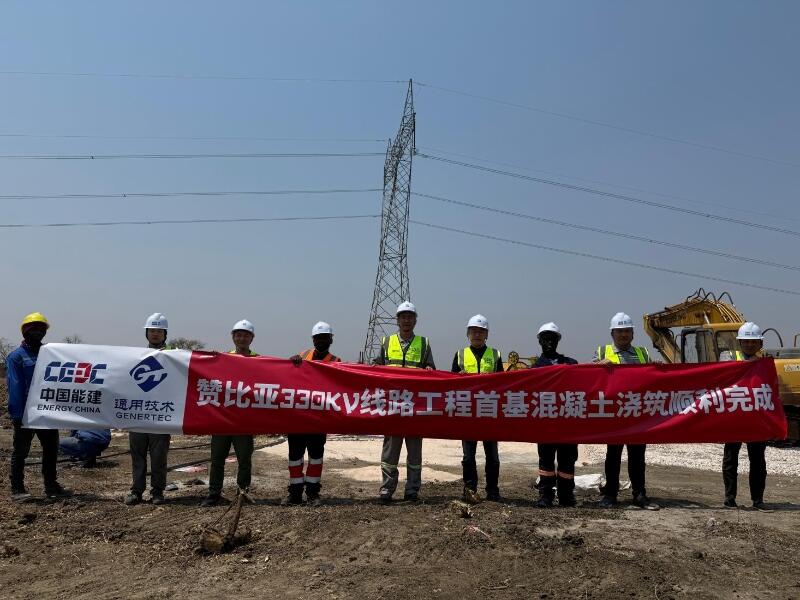
First Foundation Concrete Pour Successfully Completed for Zambia Kafue West–Muzuma 330kV Transmission Line EPC Project
Hot News

评论 (0)