Meng Qingyu, Board Secretary of China State Construction, said in an exclusive interview with China Securities Journal that new urbanization is a major development opportunity for the company. The company will leverage its "full industry chain" advantage, adhere to its core businesses of construction and real estate, and explore new areas around urban energy conservation, environmental protection, and supporting services.
Urbanization Business Transformation and Adjustment
"Whether it was the original urbanization or the current new urbanization, China State Construction has been a participant and contributor to urbanization," Meng Qingyu described the company's relationship with urbanization development.
As the only enterprise in China with special-grade general contracting qualifications in housing construction, municipal engineering, and highways, China State Construction has a complete industry chain from planning, surveying, design, and construction to real estate development and infrastructure investment and operation. The "full industry chain" advantage has become the foundation for China State Construction to rapidly advance its urbanization business.
As early as 2011, China State Construction proposed a new business model integrating planning and design, investment and development, contracting and construction, and industrial operation and management. Within two years, the company has signed comprehensive urban development strategic cooperation agreements with dozens of first- and second-tier city governments, involving investments totaling 500 billion yuan.
"For a company, this full industry chain advantage will mainly be reflected in overall control of urbanization construction, cost control, and business models," Meng Qingyu acknowledged. In practice, it does not mean the company must undertake all businesses and processes of urbanization; the company allows its subsidiaries to explore different operating methods. This year, the company's investment in urbanization business has achieved repayments of 1.2 billion yuan, indicating that the overall direction of this business model is feasible and operational risks are controllable.
"I feel that as long as a market operation mechanism for new urbanization can be established, the company's comprehensive urban development business can advance rapidly," Meng Qingyu said. The company's primary business is construction engineering, and its secondary business is real estate development. He hopes that in promoting new urbanization, the company can find and form a third main business. "Specific businesses may revolve around urban energy conservation, environmental protection, and supporting services. This is also a directional component of the company's structural adjustment," Meng Qingyu revealed.
For China, which is still in a period of rapid urbanization, infrastructure and housing construction still face significant demand. According to calculations by Shenyin & Wanguo, in the development stage with an urbanization rate of 50%-75%, infrastructure and housing construction investments grow rapidly, and only after the urbanization rate reaches 75% will they significantly slow down.
It is precisely due to the rapid advancement of urbanization that China State Construction's business scale has grown steadily. As of the end of November, China State Construction's newly signed construction orders increased by about 30% year-on-year, with new orders exceeding 1 trillion yuan and orders in hand awaiting construction exceeding 1.6 trillion yuan.
However, while expanding its urbanization business, China State Construction also faces many challenges. "The problem the company encounters in advancing urbanization business is that although initial contracts are signed smoothly, there are many difficulties in implementation. Among the many obstacles, what we feel most deeply is that local governments' fiscal and administrative powers are too restricted, and administrative approvals are too slow," Meng Qingyu said frankly. He hopes that under the framework of advancing urbanization, a batch of policy documents restricting urban development will be cleaned up and abolished, and diversified urban development models will be encouraged.
Adhering to Mid-to-High-End Real Estate Development
103.1 billion yuan—this is the operating result delivered by China Overseas in the first 11 months, making China Overseas the fourth real estate enterprise to surpass the 100 billion yuan sales mark this year. As the main real estate platform under China State Construction, China Overseas has already completed its full-year sales target ahead of schedule. According to China State Construction's plan, adhering to mid-to-high-end real estate development will be the main positioning of its future real estate business.
Data shows that from January to November, China Overseas' cumulative contracted sales amounted to HK$131.76 billion, equivalent to 103.1 billion yuan. As of the end of November, cumulative subscribed but uncontracted sales amounted to HK$9.25 billion and subscribed but uncontracted area was 403,000 square meters. New land reserves reached 11.09 million square meters, of which new attributable land reserves were 10.684 million square meters.
"As long as China's urbanization process is not complete, the overall supply-demand imbalance in real estate will not fundamentally change. From this perspective, China State Construction will adhere to the real estate business direction in the long term," Meng Qingyu said. In the future, the company's real estate development will still focus on the mid-to-high-end commodity housing market.
Currently, China State Construction has two main real estate brands: China Overseas Property and China Construction Property. Among them, China Overseas Property maintains annual business growth of over 20%. Although China Construction Property is a medium-sized real estate enterprise, it is developing rapidly with a compound growth rate of up to 60%.
This year, China State Construction proposed integrating its real estate businesses, planning to inject the real estate development businesses operated by China State Construction Engineering Corporation's Real Estate Division, China Construction Property, and China Construction International Construction Co., Ltd. into China Overseas Property. In response, Meng Qingyu said that the real estate projects directly operated by China Construction Property are already running under the leadership of China Overseas Property. Regardless of the progress of integration, all of the company's real estate projects will not be affected.
According to China State Construction's calculations, the company's annual real estate sales scale is about 10 million square meters, with about 30 million square meters under construction, and the development and construction period generally takes about 3 years. At the same time, although the company's new land reserves fluctuate greatly each year, the overall approach is to keep pace with sales, about 10 million square meters per year, with a slight increase.
Data shows that China State Construction currently has land reserves of over 70 million square meters. About 90% of these land reserves are concentrated in first- and second-tier cities, and about 10% in third-tier cities with strong economic strength and robust housing demand. "We don't care about the administrative level of a city; we only care about whether the economic development prospects are good, whether the population aggregation capacity will continue to improve, and whether potential real estate market demand will remain strong," Meng Qingyu said. Whether it is commodity housing projects or commercial real estate projects, the company always adheres to the principle of economic strength first.
In recent years, China State Construction has also increased its layout in commercial real estate. It is understood that the company's office building projects have entered 9 cities, and 5 Uni-City projects have been developed. Meng Qingyu said the company will also learn from the experience of real estate business integration, continue to strengthen asset restructuring of other professional segments, and leverage the reform window of the national IPO registration system to promote the spin-off and listing of these professional companies.
Accelerating Overseas Business Layout
As one of the earliest companies to "go global," China State Construction's overseas business revenue once accounted for one-third of Chinese companies' overseas revenue, while currently its overseas business revenue accounts for only 5%. China State Construction stated that in response to the national call to "go global" and to balance its business proportions, its strategic goal of accelerating overseas layout will not change.
It is understood that China State Construction's overseas business structure is tilting toward infrastructure and real estate. Since listing, the company has been advancing business structure adjustment, aiming to adjust the revenue proportion of housing construction, infrastructure, and real estate from 8:1:1 to 5:3:2, and overseas business is no exception.
Currently, China State Construction's overseas infrastructure and real estate businesses have made breakthroughs. In infrastructure, China State Construction mainly expands into roads, bridges, airports, cultural facilities, and other businesses, having undertaken a number of high-value, influential projects such as the Alexander Hamilton Bridge in the United States, the Hong Kong-Zhuhai-Macao Bridge, the Hong Kong New Airport, the Kenya Multi-Functional Dam, and the Congo (Brazzaville) Highway No. 1. The company's infrastructure business has accounted for 40% of overseas contract value. In real estate, the company has acquired a Grade A office building in London's financial district and started real estate development in New York and New Jersey.
"The company will seize opportunities in restructuring and mergers and acquisitions to accelerate the pace of overseas business expansion. If all goes well, the market will soon see the company's efforts in this regard," Meng Qingyu said frankly.
In addition to expanding overseas business, China State Construction also has the advantage of an overseas financing platform. Currently, China State Construction has four listed subsidiaries in Hong Kong—China Overseas Land & Investment, China Overseas Grand Oceans, China State Construction International, and Far East Global. The former two are mainly engaged in real estate business, while the latter two focus on construction. "Benefiting from the international financing platform, the company's overall financing cost is generally lower than the domestic one-year bank loan interest rate. The company has ample funds to meet the needs of expanding new urbanization business," Meng Qingyu said.
Experts Predict Six Industry Giants Will Emerge in Construction Machinery
下一篇XCMG: New XSZ2000 Deep Well Drilling Rig Officially Rolls Off the Production Line
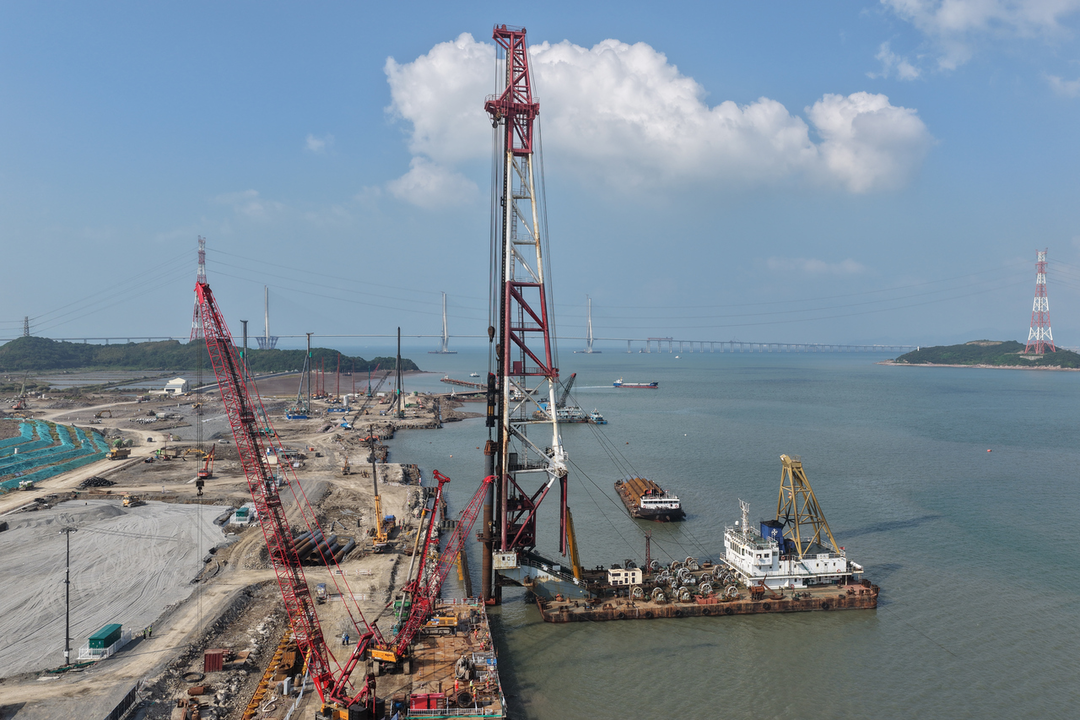
2026-09-28 1157 0
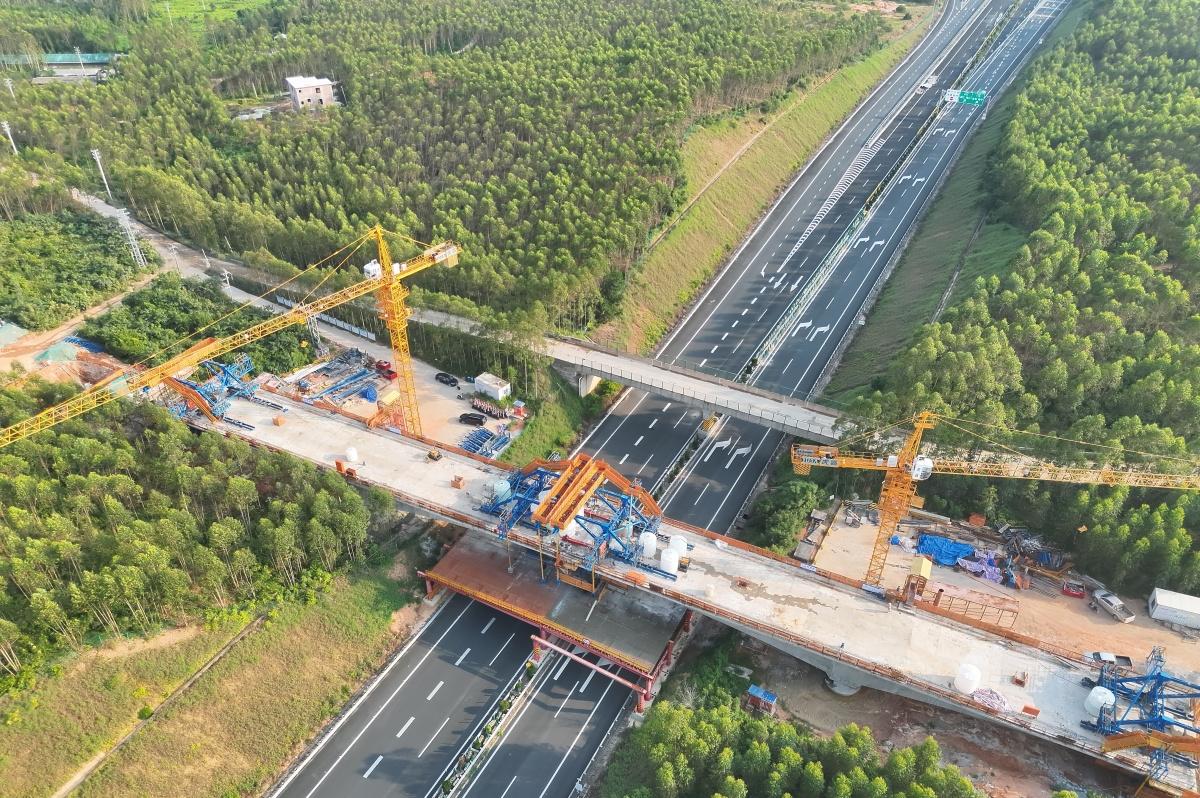
2026-09-24 10586 0
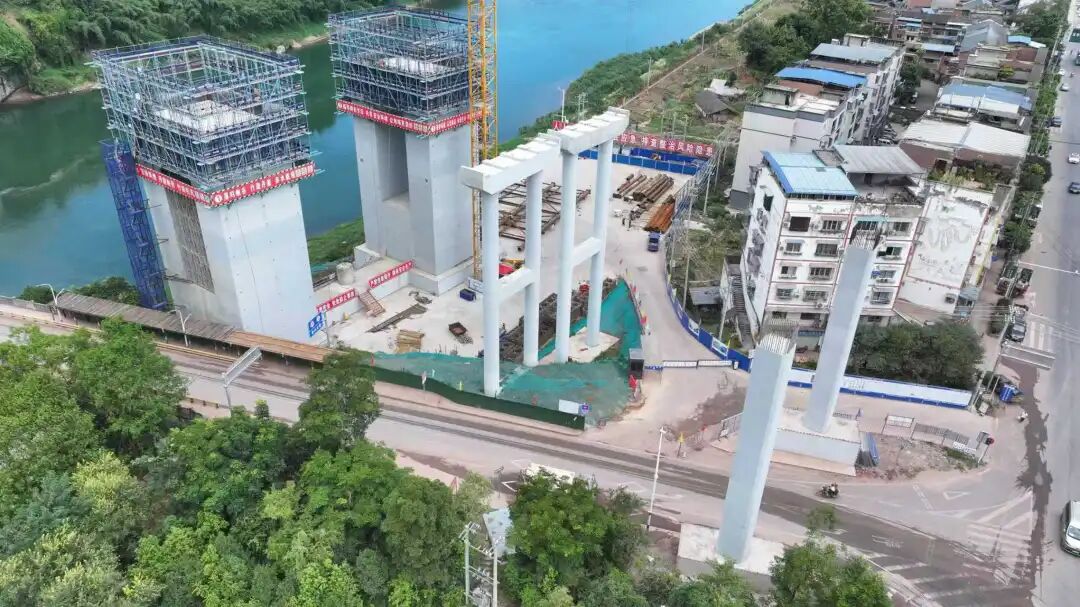
2026-09-23 10714 0
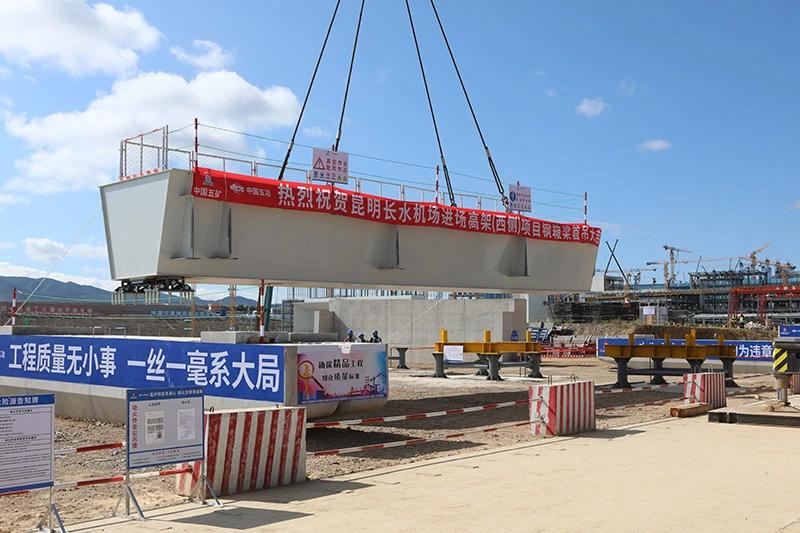
2026-09-22 10808 0

Lize City Air Terminal Underground Main Structure Nearing Completion: Maximum Transfer Walk Under 4 Minutes After Operation

Anti-seepage Curtain for Main Lock Pit of CSCEC Port Shenqiu Double-Line Lock Project Completed on Schedule

All Pile Foundations Completed on Quanzhou Baiqi Channel

Hainan Upgrades Housing and Municipal Infrastructure

First Foundation Concrete Pour Successfully Completed for Zambia Kafue West–Muzuma 330kV Transmission Line EPC Project
Hot News

评论 (0)