"Join hands to advance modernization and jointly build a community with a shared future." As a large state-owned enterprise, China Railway Seventh Group (CREC-7) has always kept its responsibilities firmly in mind, sparing no effort and bearing heavy burdens on the journey to advance Africa's modernization. It is committed to local infrastructure construction, deepening talent cultivation, and helping local people find employment... Local people sing the praises of one moving story after another about the bureau.
There is an African proverb: "A true friend is one who travels the same road with you." Since 2001, CREC-7, as a practitioner in advancing high-quality Belt and Road cooperation, has undertaken nearly 300 projects in 15 African countries including the Democratic Republic of the Congo (DRC), Uganda, and Ethiopia, completing a cumulative total of over 6,430 kilometers of asphalt roads, 113 bridges totaling 11,470 linear meters, and 14 mining stripping projects with over 200 million cubic meters stripped. It employs more than 13,000 local people year-round. Through the efforts of successive generations of CREC-7 builders, it has made outstanding contributions to China-Africa mutually beneficial cooperation.
"It is both perseverance and inheritance"
Most of Africa lies between the Tropic of Cancer and the Tropic of Capricorn, earning it the name "Tropical Continent." Nature has given Africa boundless gifts; every year, its rich tourism resources attract countless visitors. But the scorching heat, complex terrain, rampant mosquitoes, and ever-present wild animals have brought endless troubles to the builders.
"When I first arrived in Africa, apart from the language barrier and shortage of supplies, the most unbearable thing was 'getting the shivers' (malaria)." recalled Wang Yanqiang, a veteran overseas worker who came to Africa back in 2004 and now serves as Party branch secretary of CREC-7 Overseas Company's DRC region. "That feeling is awful—chills and fever alternating, and when it flares up it tortures you half to death." "But now, with improved medical conditions, we've gone from getting it three times a year on average to once a year, and everyone seems to have become 'immune.' And the days of living in shipping containers with no water, no electricity, and no cell signal are already history." Changing tack, Wang Yanqiang pointed to the distinctively decorated office building at the DRC regional management headquarters, his face full of pride. Indeed, the camp's paths, bamboo groves, and green spaces complement one another, making it look just like a holiday resort.
From April to October 2008, CREC-7 built the Lubumbashi–Kasumbalesa road in the DRC. The Luka road is the only transport artery and economic lifeline connecting the DRC's southern provinces with neighboring Zambia. Recalling this road, everyone joked that it was the worst road they had ever built—full of potholes, dusty in the dry season and muddy in the rainy season. For newcomers, it could only be described as crawling through the mud. Previously, the 90-kilometer road took a whole day to traverse. When the Luka road was delivered on schedule, its speed and quality stunned the locals and made CREC-7's overseas name. It is no exaggeration to say that 80% of the roads in Haut-Katanga and Lualaba provinces—the major mining provinces in the southeast of the DRC's economic center—were built by CREC-7.
In 2016, CREC-7 participated in the construction of the DRC's first large modern smart hydropower station built entirely with Chinese standards, Chinese equipment, and Chinese technology—the Busanga Hydropower Station. This also successfully opened up the market for CREC-7's building construction and power projects. "This is the first hydropower station we have invested in and built on our own, and no matter what, we must build this project well," said Yuan Yuan, current manager of the DRC region. "Previously we only built roads and bridges; this project is both a challenge and an opportunity for us." Despite the low altitude, the muggy heat, and a stretch of road passing through primeval forest with many snakes and rats, the project was ultimately completed and put into operation on schedule. Li Lei, chief engineer of the Lubumbashi road project, was then responsible for surveying at the Busanga Hydropower Station. In the uninhabited primeval forest, he climbed mountains and crossed ridges every day, wrapping mosquito netting around his head and wearing rain boots to guard against snakes and insects, while constantly watching out for wild animal attacks. By the end of the survey he had lost over 20 jin and was so tanned that his wife, working on the same site, could barely recognize him. He said, "Someone has to do the work. If we can complete such bitter and exhausting work, then no problem we encounter later will be a problem." From then on, CREC-7 in the DRC expanded from single road construction to building construction and mining projects.
Mount Rwenzori dances, and the banks of the Congo River sing for joy. These lovable and admirable CREC-7 builders interpret their overseas perseverance with an optimistic and open-minded spirit. "Walking on the road I built myself, I feel a deep sense of pride!" "Hearing locals say CREC-7 builds good roads makes me so happy." "Everyone working together on one thing brings a great sense of accomplishment." According to incomplete statistics, nearly 300 CREC-7 staff have worked overseas for more than 10 years. Jin Rongxing, commercial manager of the DRC region, said, "Responsibility makes us resolutely set foot on this land of Africa. In the new era, we need even more to carry forward the striving and dedication spirit of the older generation of CREC workers during difficult times."
"The Remarkable CREC-7"
Traveling thousands of miles, crossing mountains and seas, rushing to Africa. What gratifies CREC-7's builders most is that they have not only left behind a large number of quality projects for the locals but also established CREC-7's resounding corporate brand.
In the DRC, mention CREC-7 (China Railway Seventh Group) and almost everyone knows it. "On the roads from Lubumbashi to the surrounding cities, only vehicles bearing CREC-7 plates can pass freely through the toll stations, exempt from tolls," said Ma Yuzhong, head of the Katonto crushed stone yard. A while ago the stone crusher broke down, and because parts could not be bought locally, the yard was shut down for two days. Next door was a crushed stone yard run by a local. The owner came over specially and voluntarily brought us I-beams. He said, "I'm giving these to you for free—hurry up and fix the machine. Your CREC-7 is remarkable; you've come to bring us benefits." At that moment, Ma Yuzhong was moved for a long time by the pride brought by the company's honor.
In December 2006, CREC-7 undertook the 3.95-kilometer municipal project in Dar es Salaam, Tanzania, with Wang Guanghui, Party secretary of the Ethiopia region, as project manager. At the time, 27-year-old Wang Guanghui was the oldest in the team. Lacking equipment and undertaking a coarse-graded asphalt concrete road for the first time, the Norwegian supervisor Musa was deeply skeptical of CREC-7's construction capability: "This is a key project, and you bring a bunch of student soldiers to fool me?" ... In 2023, when Wang Guanghui passed through Tanzania on a business trip, he invited Musa to walk the road again. Musa not only gave a thumbs-up but said, "I'm truly proud of you. More than ten years have passed, and other roads have been repaired and resurfaced many times, yet the original stones of this road are still perfectly fine. The roads you build never have quality problems."
In May 2008, when then-President of the Republic of Zambia Mwanawasa inspected the site of the Chambishi Bridge being built by CREC-7, he said: "Remarkable—you should know this is Zambia's Three Gorges Project!"
On April 26, 2014, the Sierra Leone road project undertaken by China was completed. Former Sierra Leonean President Koroma commented: "This road is currently an important road in Sierra Leone and also the one of the best quality. It has witnessed the official delivery and opening to traffic of this road of China-Sierra Leone friendship."
On March 26, 2022, the Foundiougne Bridge, the longest bridge in Senegal built by CREC-7, was officially opened. Senegalese President Macky Sall attended the opening ceremony and said the bridge is of extraordinary significance to the people of Senegal. Chinese Ambassador to Senegal Xiao Han said the Foundiougne Bridge is a bridge of models, a bridge of hope, and a bridge of friendship. Foreign Ministry Spokesperson Zhao Lijian gave a thumbs-up to Senegal's Foundiougne Bridge on his social media.
Since 2001, CREC-7 has undertaken Africa's only over-100-kilometer below-sea-level road crossing desert and volcanic rock terrain—the 118-kilometer road in Ethiopia; Tanzania's first multi-tower cable-stayed bridge—the Tanzanite Cross-Sea Bridge; Zambia's first cantilever-cast continuous girder bridge—the Zambia Silma Bridge; Namibia's highest-grade road—the Namibia Airport Expressway; Botswana's first overpass—the Thapama Interchange (Botswana A1 Project); Sierra Leone's first expressway operating under Chinese standards—the Sierra Leone Fuma Expressway; West Africa's first high-quality, high-standard, well-equipped professional training academy for diplomatic personnel—the China-aided Sierra Leone Diplomatic Training Academy; and Uganda's first intelligent traffic signal control system municipal project—the 5.8-kilometer Phase I of the Kampala Road and Intersection Upgrade Project... To date, CREC-7's overseas projects have won 9 "National Quality Engineering Awards" and 2 Overseas Luban Prizes, and it ranked 47th in the 2023 Top 100 Chinese International Contractors.
"More than family"
"Running a project is like running a household." The color steel houses at the DRC Lualaba road project site were moved over from a Mozambique project in 2007, and such things are everywhere. CREC-7's overseas project construction has always adhered to the development philosophy of "high standards, benefiting people's livelihood, and sustainability," yet every project has taken frugality to the extreme. "Equipment expert" Chen Yonghe said, "Equipment is just like people—if you take good care of it, it will serve us for several more years." Many builders treat overseas as their own home and affectionately call the project site "home." Bian Peng, Party branch secretary of the Uganda region, said naturally, "Here, we are one family, one team. Everyone treats work matters as family matters, thinking with one mind and working with one purpose—there's nothing we can't accomplish."
CREC-7's overseas project management implements unified management of large projects by country, with management staff allocated to small projects in each country according to their size. Almost everyone holds multiple posts, and the localization rate of project operational staff exceeds 93%. "Take the enterprise as a family and treat employees as relatives"—CREC-7's "family" culture has taken deep root in distant Africa. "Overseas, we are one family." Zhang Lifeng, head of the Ethiopia courthouse building project, said, "We're all brothers working together. Work must be guaranteed in quality and quantity. Whatever you want to eat, just tell the cook—I'll even make it myself." Xiao Bin, safety director of the DRC mining construction consortium, came to Africa in 2013. Looking at the shady trees in the camp and the various fitness and leisure equipment shipped from China, the corners of his mouth lifted unconsciously. "The company has not let us down. I'm very content—overseas is my second home." Overseas, many builders have followed in the footsteps of their fathers or even grandfathers to come here, and their feelings for the company run even deeper: "Only when the company does well can we do better."
In recent years, CREC-7 has actively responded to and resolved various urgent and difficult problems of overseas employees and their families by establishing care archive information for frontline overseas staff, setting up service hotlines and online platforms, and carrying out condolence activities in various forms, thus relieving overseas employees of their worries. Guo Junhai, resident doctor at the DRC regional management headquarters, has been overseas for 17 years. "Here, the 'family' culture is real and tangible. Eating well and living well keeps people's hearts steady. From a parent falling ill to a marital spat, the company finds ways to help resolve it." His plain words reveal contentment. Nani, a local employee in Ethiopia who has worked on the Ethiopia 56-kilometer project for 8 years, said, "Our project is a big family, and both the local government and the roads authority speak highly of it. I'm very proud to be a member of CREC-7."
"It is responsibility, and even more, commitment"
Mutual help and win-win cooperation. "Here we are not just building roads and bridges; we want even more to establish the national image of China's sense of responsibility," said Wang Yansong, a post-90s finance director of the DRC region, voicing everyone's sentiments.
In recent years, CREC-7 has cumulatively invested in or participated in the construction of more than 200 infrastructure projects in Africa, including railways, airports, and roads. At the same time, it has actively participated in nearly 200 volunteer services such as local medical and health care, emergency rescue and disaster relief, road repairs, and safety outreach, and has repeatedly taken the lead in urgent, difficult, dangerous, and heavy tasks. It has received 46 letters of thanks from the Ministry of Commerce, overseas embassies, and local governments and residents, demonstrating with practical actions the image of a lovable, trustworthy, and respectable Chinese enterprise.
In 2014, the world-shocking Ebola virus broke out. On September 17, China's aid Ebola mobile laboratory needed to be transported as quickly as possible from Lungi International Airport to the China-Sierra Leone Friendship Hospital. Upon receiving the notice, CREC-7's Sierra Leone regional management headquarters immediately arranged personnel and completed the task on time with guaranteed quality and quantity, winning high praise from former Sierra Leonean President Koroma: "Trustworthy and true to their word!" In the early hours of August 14, 2017, heavy rain in the Freetown area of Sierra Leone triggered a landslide that buried hundreds of people. The Sierra Leone region immediately set up a rescue team and participated in the rescue, winning precious time to save lives. Local rescue workers and residents at the scene gave CREC-7 employees thumbs-ups: "Chinese good!" More than a thousand media outlets worldwide, including Xinhua News Agency and People's Daily, reported and republished the story. On March 10, 2019, a plane crash occurred in Ethiopia. After receiving the rescue notice, CREC-7's Ethiopia company immediately arrived at the crash site and worked through the night for 26 hours to complete the excavation work. The Ethiopian side expressed its gratitude to China through the roads authority, believing that Chinese enterprises extending a helping hand at a critical moment was the highest embodiment of international humanitarianism. It is understood that in the first three days of the rescue, China was the only foreign search and rescue team in the accident rescue, winning honor for the country and building an image for the enterprise. During the pandemic in 2021, CREC-7 mobilized a large number of volunteers to actively assist Chinese embassies in Ethiopia, Zambia, Uganda, and other countries in carrying out the "Spring Sprout Action," demonstrating with practical actions the responsibility and commitment of a major-country central enterprise.
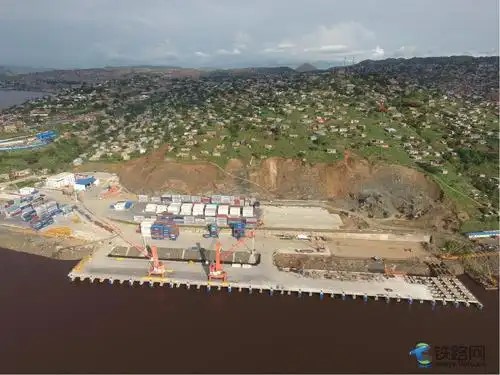
Gathered, they are a blazing fire; scattered, they are stars across the sky. Inspired by the diligence, pragmatism, and pioneering spirit of the older generation of overseas workers, batch after batch of young CREC overseas workers have taken root abroad. The beliefs of "work first," "if you do it, do it best," and "since we're here, let's do it well" have been integrated into their blood. The bonds forged through shared hardships are all the more solid. In the future, they will continue to cling together like pomegranate seeds and keep shining on this passionate land of Africa.





评论 (0)